
Dead Man’s Hand Explained: What Is the Dead Man’s Hand in Poker?
Poker has its own language, traditions, and stories that give the game real character. Few phrases are as familiar as the Dead Man’s Hand.
Plenty of people recognise the term, yet not everyone can say exactly which cards it describes or how it entered poker folklore. The phrase sits at the crossroads of history and the felt, which is why it still gets mentioned today.
This blog post unpacks the cards involved, the most common variations, the backstory, who it is linked to, the odds of seeing it, how it fits into the rules, and how it shows up in film, books, and more.
Read on to learn more.
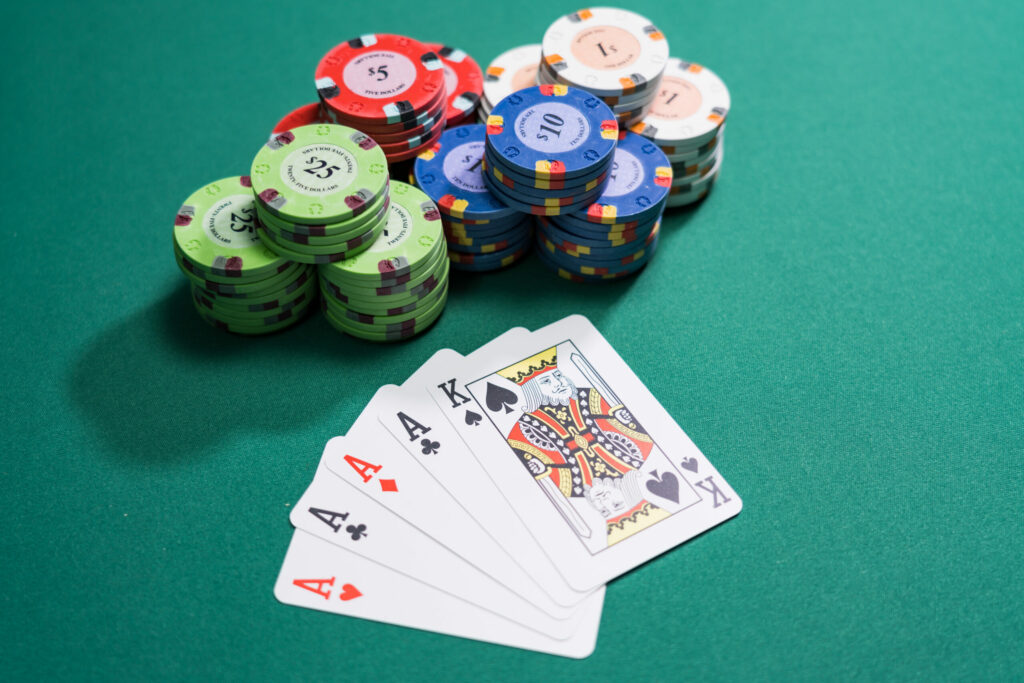
What Cards Make Up the Dead Man’s Hand?
The Dead Man’s Hand usually means a two-pair hand made up of black aces and black eights. In other words, the ace of spades, ace of clubs, eight of spades, and eight of clubs. The fifth card is not fixed and is often left undefined.
Because the fifth card is not agreed upon, the focus is firmly on those two pairs. Within standard poker rankings it is simply a two pair. It can win or lose like any other hand of the same rank, depending on what the other players hold.
You might hear people mention different versions, which brings us neatly to the next point.
Common Variations Of The Dead Man’s Hand
Although black aces and black eights are the accepted core, older sources and retellings do sometimes swap in other ranks or suits. Some mention queens or jacks, or specify a fifth card such as the queen of hearts or jack of diamonds.
There has never been universal agreement on that extra card, and modern writers and players generally stick with black aces and black eights as the definitive centre of the hand.
With the basic make-up clear, the natural question is how this phrase first entered the game’s vocabulary.
Where Did The Term Dead Man’s Hand Come From?
The term is tied to a late 19th-century event from the American West. Most accounts link it to the shooting of James Butler “Wild Bill” Hickok during a poker game.
According to popular retellings, Hickok was holding black aces and eights when he was killed at the table, and the combination later picked up the name Dead Man’s Hand. Historians point out that early references are inconsistent, and the exact fifth card is unknown, which is why the core definition focuses on the two pairs.
That debate aside, the story stuck, and the phrase became part of poker’s shared language. Which brings us to the person most closely associated with it.
Who Was The Dead Man’s Hand Associated With?
The hand is most strongly linked with Wild Bill Hickok, a lawman and gambler from the Old West. He was shot in 1876 in Deadwood while seated at a poker table, and his name has been tied to the hand ever since.
Even though the full set of five cards is uncertain, the connection between Hickok and the black aces and eights has endured. Understanding that link helps explain why the phrase still gets mentioned when the subject of poker lore comes up.
Curious how often it actually appears? The numbers are interesting.
What Are The Odds Of Being Dealt The Dead Man’s Hand?
In a five-card deal from a standard 52-card deck there are 2,598,960 possible hands. If the Dead Man’s Hand is taken to mean the two black aces and two black eights plus any fifth card that is not another ace or eight, there are 44 such combinations. That works out to roughly 1 in 59,000.
If you insist on a specific fifth card, the probability drops to about 1 in 2.6 million, because you are now talking about a single exact five-card set.
In community-card games such as Texas Hold’em, the path to those same four cards involves both private and shared cards, so the numbers change with the stage of the hand and the action. Either way, assembling that exact combination remains rare in normal play.
With the rarity in mind, it helps to place the hand within the standard ranking system.
Dead Man’s Hand And Poker Rules
By the book, the Dead Man’s Hand is just a two pair. It sits below three of a kind, straights, flushes, and so on. Its strength in any round depends on what else is out there. For example, two pair aces and eights beats two pair kings and tens, but it loses to three queens.
There are no special bonuses or penalties attached to it in mainstream poker formats. The reason it stands out is historical, not mechanical, which is why players tend to talk about it rather than treat it differently at showdown.
That storytelling pull explains why the hand shows up far beyond the card room.
Dead Man’s Hand In Popular Culture
The Dead Man’s Hand crops up across film, television, books, comics, music, and games, often as a nod to Western themes or as a visual shorthand for danger or consequence. Filmmakers might frame a close-up of the black aces and eights to signal a pivotal moment, while authors use the phrase to anchor a scene in frontier lore.
Because the image is instantly readable, it works as a simple motif. It does not claim anything about how poker works in reality; it is there to set tone, hint at stakes, or tie a story to a particular time and place.
That visibility has also fed a few beliefs around the hand itself.
Is The Dead Man’s Hand A Superstition Or Myth?
For some, the hand carries a superstitious edge because of the story attached to it. Over time, that narrative weight has led a few players to treat it as an ominous sign. None of this is reflected in the rules of the game, and there is no evidence it influences outcomes at the table.
The messy details of its origin story add to the myth-making. Strip away the folklore and you are left with a normal two pair that wins and loses on the same terms as any other.
Set the myths aside and it is straightforward to spot when the hand actually appears.
How To Recognise A Dead Man’s Hand At The Table?
Recognising it is about reading the cards. Traditionally, a Dead Man’s Hand means a player holds the two black aces and the two black eights, usually spades and clubs, plus one other card that is not fixed by the definition.
To identify this hand, look for:
- Ace of spades
- Ace of clubs
- Eight of spades
- Eight of clubs
- One other card that is not an ace or an eight
In most poker formats the hand carries no special rule or treatment. It is evaluated like any other two pair.
If you choose to play poker, keep control of time and spend only what you can afford. Set limits that suit your circumstances, take breaks, and do not chase losses. If gambling starts to affect your well-being or finances, seek support early. Independent organisations such as GamCare and GambleAware provide free, confidential help.
Understanding the Dead Man’s Hand adds colour to the game, but the cards themselves never replace good judgement.
**The information provided in this blog is intended for educational purposes and should not be construed as betting advice or a guarantee of success. Always gamble responsibly.