
Are Online Poker Games Rigged?
As online poker grows in popularity, many players—new and experienced—wonder how fair the games truly are. With everything happening on a screen, it’s natural to question whether the odds are as they appear.
In this article, we examine one of the most common concerns in online poker: are the games rigged? By understanding how platforms operate and the safeguards that promote fairness, you’ll be better placed to make informed decisions and play with greater confidence.
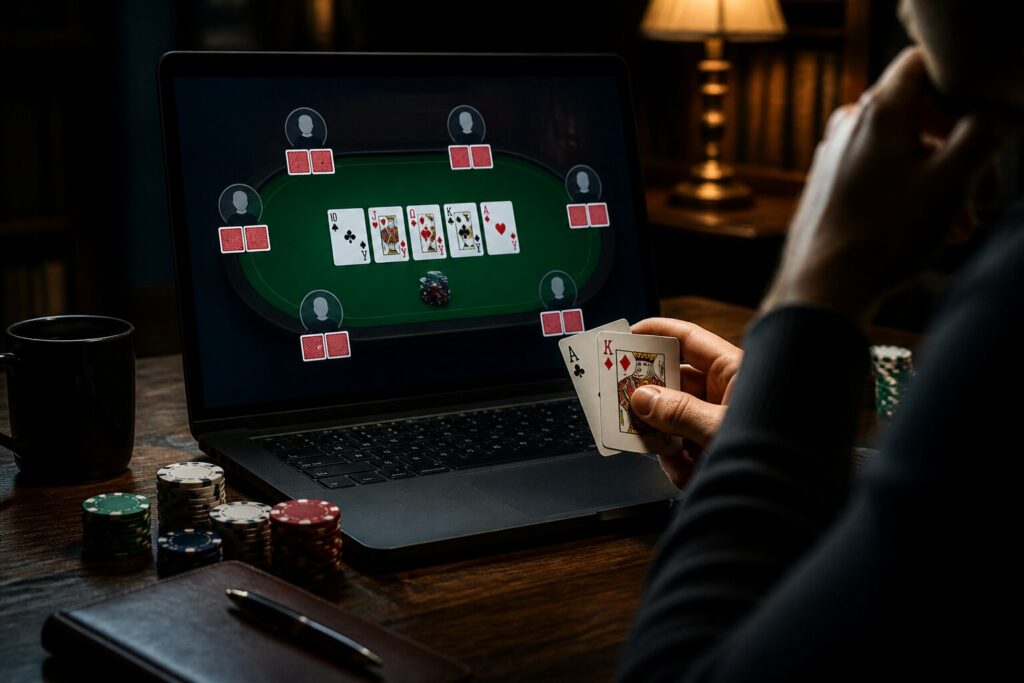
How to Play Online Poker
- Choose a reputable online casino licensed by the UK Gambling Commission (UKGC) to ensure safety and proper regulation.
- Create an account, enter your details and complete identity verification.
- Deposit funds using available payment methods (e.g., debit cards or e-wallets like PayPal) and set a budget before you start.
- Learn the rules of your chosen variant (e.g., Texas Hold’em or Omaha) and pick a game that suits your skill level and preferences.
- Join a poker table with stakes that match your budget and experience.
- Always follow responsible gambling practices and never wager more than you are comfortable losing.
Is Online Poker Skill or Luck?
Both skill and chance matter in online poker. Skill influences decisions, strategy and long-term results.
Skill is central to success. Skilled players know the rules, observe opponents, manage their bankroll and choose when to bet, call or fold. Over time they develop tactics that increase their expected value.
Chance also plays a real part. Online poker uses Random Number Generators (RNGs) to ensure each hand is dealt randomly and fairly, so the cards a player receives are unpredictable.
Top online players combine technical knowledge and strategic thinking with adaptability to the randomness of the cards. Even the best strategy must account for short-term variance.
Is Online Poker Rigged?
It is natural for players to worry about the fairness of online poker, especially given stories that suggest games might be rigged. Understanding how the systems work helps address those concerns.
At the core of every fair online poker game is a Random Number Generator, or RNG. The RNG shuffles the virtual deck and determines which cards are dealt, using complex algorithms to make each hand random in the same way a dealer shuffles physical cards.
Online poker sites operating in the UK are regulated by the UK Gambling Commission (UKGC). The UKGC requires the use of certified RNGs and sets standards that operators must meet.
Independent organisations regularly test and audit RNGs to confirm they operate correctly. Because of this oversight, outcomes are intended to be both random and fair.
The UKGC also enforces strict rules against game manipulation. Operators found cheating can face heavy penalties or have their licence revoked.
How Do Online Casinos Ensure Fairness?
Online casinos follow several important practices, many of which are set out by the UK Gambling Commission (UKGC). These rules are designed to maintain a fair and secure gaming environment for players.
A key component is the use of random number generators (RNGs). RNGs produce unpredictable results for games, such as card dealing in poker, ensuring outcomes are not biased or predictable.
Casinos are also subject to regular audits by independent third-party organisations. These audits verify that RNGs work correctly and that game outcomes and payout processes are fair.
Transparency is important too. Reputable casinos publish clear information about game rules, payout rates and other relevant details so players can understand what to expect.
Finally, operators implement strong player protection measures, including secure payment systems and strict data privacy policies. These safeguards help keep player funds and personal information secure.
Together, these measures mean reputable online casinos prioritise fairness and security in their operations.
**The information provided in this blog is intended for educational purposes and should not be construed as betting advice or a guarantee of success. Always gamble responsibly.