
Blackjack Dealer Average Hand Explained: Typical Hands & Probabilities
Ever wondered what cards the dealer is likely to end up with in a game of blackjack? You’re not alone. Understanding the dealer’s average hand and the odds behind their decisions is one of the most useful ways to take your blackjack knowledge up a notch.
Knowing these details can help you read the table more clearly and make steadier choices. Whether you’re new to blackjack or looking to sharpen your approach, a little insight into dealer probabilities can make a real difference.
Read on to discover what hands dealers usually make, how it all works, and what it means for your game. It’s all explained in simple terms (no maths degree needed).
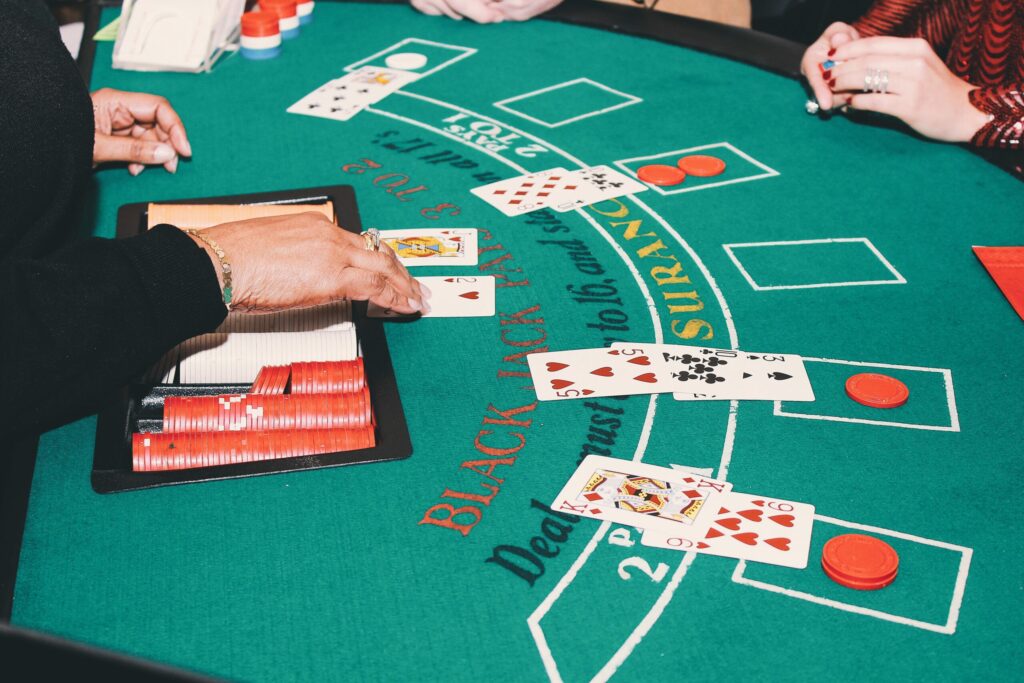
What Is The Average Dealer Hand Total?
When we talk about the dealer’s “average hand total” in blackjack, we mean the typical value their cards add up to after they complete their turn under the house rules. It reflects the long‑run statistical tendency over a large number of rounds played under the same conditions, not a forecast for any single hand or session.
In most games where the dealer must stand on 17 or higher, their final total falls between 17 and 20 more often than not. Over many rounds, the dealer will on average finish close to 18. Some analyses include natural blackjacks as 21 in the totals, while others report them separately; either way, the clustering around high‑teens totals is common in standard rulesets.
This is a rough benchmark rather than a target or guarantee. Individual outcomes vary hand to hand, and the dealer will still sometimes bust or end lower or higher than 18. You cannot rely on an average to predict the next result, and adjusting stakes solely on this information does not change the underlying odds.
The precise average can shift with table rules. A key example is whether the dealer stands or hits on soft 17 (a 17 that includes an Ace counted as 11). Dealers who hit soft 17 tend to push their totals up slightly more often but also risk busting a little more frequently. Rules around the dealer peeking for blackjack, whether the game is European (no hole card) or American (hole card), and blackjacks paying 3:2 or 6:5 can all influence overall outcomes and volatility.
Other factors, such as the number of decks, use of a continuous shuffler, and how deeply the shoe is dealt, can also influence the distribution of dealer results. In regulated online games, certified random number generators determine card order to keep outcomes random within the stated rules. In live‑dealer formats, physical cards are handled under documented procedures, but each hand remains independent within the game rules.
Keep this average in mind as background information only. It does not remove the house edge, and no strategy can guarantee profit. Basic strategy aims to minimise the house advantage but cannot ensure specific outcomes. Side bets typically carry a higher house edge; always review the paytable and table rules before you play.
Remember that gambling should be for entertainment, not as a way to make money. Set limits, never stake more than you can afford to lose, and be aware that past results and averages do not predict or assure future outcomes. If play stops being enjoyable, consider taking a break or seeking support.
How Does The Dealer Play Their Hand?
The dealer follows fixed, published rules in blackjack, so there’s no personal discretion in how they play any hand. This creates a consistent procedure: the dealer doesn’t make strategy choices, and their actions are determined entirely by the cards and the table rules.
These procedures are set out in the house rules and licensing conditions, and dealers are trained to apply them the same way every round. They do not provide personal advice or vary decisions, and they cannot influence outcomes beyond following the prescribed sequence of play.
After all players have completed their decisions, the dealer reveals the hidden card and then plays out the hand. In many games the dealer has a face-down “hole” card from the start; in some European-style games, the second card is only taken after players act.
Where a hole card is used, some tables require the dealer to “peek” for blackjack when showing an Ace or a ten-value card, settling the round immediately if they have a natural. In no-peek formats, play continues until the dealer draws their second card. In either case, totals are calculated in the usual way, with an Ace counting as 1 or 11 as appropriate.
On 16 or less, the dealer must take another card. On 17 or more, the dealer must stand. If the dealer exceeds 21, they bust and the hand ends immediately.
The dealer will continue drawing one card at a time until the standing total is reached or the hand busts. Unlike players, the dealer never splits or doubles; they simply follow the hit/stand requirement and then settle results according to the posted payout rules, including pushes when totals match.
Table rules may vary on soft 17 (for example, Ace–6). Some games require the dealer to hit on soft 17, while others require standing on all 17s. This will be stated on the table layout or placard, and it applies in the same way every round, so you can expect a consistent approach.
Look for “H17” (dealer hits soft 17) or “S17” (dealer stands on all 17s) on the table signage, and check the minimum and maximum stakes, side-bet availability, and any other house-specific conditions before you sit down. If you are unsure, ask the dealer or floor staff to clarify before placing a wager.
With those rules in mind, how often does the dealer start with blackjack in the first place? The likelihood depends on factors such as the number of decks in use and whether the dealer takes or peeks at a hole card, which we cover next.
Remember that outcomes are determined by chance and the rules of the game. This information is for general guidance only and does not guarantee any result. Please set limits, only gamble if you are 18+ (or the legal age in your jurisdiction), and play responsibly.
How Often Does The Dealer Get Blackjack?
A blackjack occurs when the dealer’s first two cards are an Ace and a 10-value card (10, Jack, Queen, or King). Often called a “natural 21”, it is the strongest starting hand in the game and cannot be beaten; the best a player can achieve against it is a push if they also have blackjack.
Typical payout rules differ by venue, and the precise procedure for checking the dealer’s hand can vary, but these variations do not change what a blackjack is or that it outranks all other hands.
On average, the dealer makes blackjack in roughly 1 out of every 21 hands (just under 5%). In a single-deck game the chance is about 4.8%, while in multi-deck or continuous-shuffle games it moves slightly towards about 4.7%. These figures are close in practice, but they are not identical.
Exact probabilities depend on the number of decks and whether cards are dealt from a shoe or a continuous shuffler. Other table rules, such as whether the dealer stands or hits on soft 17, do not affect how often blackjacks occur, though they can influence other outcomes.
Each hand is independent, and past results do not influence future deals. No betting pattern, staking system, or strategy can change the underlying chance of the dealer receiving blackjack.
When the dealer has blackjack, the round usually ends immediately. All standard wagers lose unless you also hold blackjack, in which case it is a push and your main bet is returned.
How additional wagers from splits or doubles are settled against a dealer blackjack can vary with house rules and whether the dealer “peeks” for blackjack before players act. Always check the posted rules at the table you are playing.
Insurance is a side bet offered when the dealer shows an Ace. It typically pays 2:1 if the dealer does have blackjack, but because that outcome is relatively uncommon, the long-term expected return on insurance is generally lower than the main game for most players.
“Even money” on a player blackjack when the dealer shows an Ace is equivalent to taking insurance. Unless you are using advanced techniques and permitted conditions, insurance is usually not advisable for typical play.
Probabilities are averages, not guarantees, and outcomes are random. Variance means short runs can be very different from the long-term averages, in either direction.
Only stake what you can afford to lose. Gambling is for adults aged 18+ in Great Britain. If you choose to play, set deposit and time limits, take regular breaks, and avoid chasing losses. If gambling stops being fun or you feel it may be harming you, consider taking a timeout or seeking support.
How Often Does The Dealer Bust?
“Bust” means the dealer’s total goes over 21, which automatically loses. This is a normal part of blackjack and can occur in any hand, regardless of previous outcomes, shuffles, or recent streaks.
On average, the dealer will bust around 28% of the time. That works out to a little more than once in four hands overall, although this is an estimate based on common rules and large samples. These figures are long‑run averages, not predictions for any given session, and actual results can and do vary from hand to hand.
It’s also important to note that published averages come from simulated or theoretical models under specific conditions. Real tables may differ due to shuffling methods, continuous shufflers, penetration, and house procedures, so your experience may not match a headline percentage in the short term.
The precise rate shifts with specific table rules. For example, whether the dealer hits or stands on a soft 17, the number of decks in use, and any drawing restrictions after splitting can all move the bust frequency up or down.
Other rules such as doubling options, surrender availability, and whether blackjacks pay 3:2 or 6:5 also interact with overall volatility and house edge. Always check the table rules before you play so you understand the environment you are choosing.
The dealer’s starting upcard has a big influence. A low upcard such as 5 or 6 tends to push the dealer into hitting more often and increases the chance of going over 21. By contrast, a high upcard such as a 10 or an Ace usually leads to fewer busts and stronger finishes.
These swings depend so much on the upcard that it is worth looking at it in its own right. Even then, no single upcard guarantees a particular outcome, and short‑term results can differ markedly from long‑run averages, even across many hands.
Strategy decisions are typically based on mathematics and table rules, not on trying to “predict” a bust. Using basic strategy can help reduce the house edge, but it does not remove it, and it does not ensure profit.
This information is provided for guidance only and does not guarantee any specific results. Blackjack involves chance; play responsibly, set limits, and never wager more than you can afford to lose. If gambling stops being fun, take a break and seek support where appropriate.
Dealer Outcome Probabilities By Upcard (Key Figures Explained)
The dealer’s “upcard” is the card they show face-up at the start of each round. This single card offers a quick snapshot of what might follow, but it does not determine the outcome. Probabilities are long‑run estimates based on common rules and can vary with the number of decks, whether the dealer hits or stands on soft 17, and other table conditions.
These figures are averages observed over very large samples. In the short term, sequences can deviate markedly, and isolated results should not be treated as evidence that the underlying odds have changed. Individual rounds remain random, and no decision guarantees a particular result.
If the dealer shows a low card from 2 to 6, they are, on average, more likely to bust over many hands. With a 5 or 6 showing, the bust chance is often cited at roughly 41% to 42% under typical multi‑deck rules where the dealer stands on all 17s.
These low cards are sometimes called “bust cards” because they push the dealer to draw with less room to land safely. That said, “more likely” does not mean “likely this hand”: a 4, 5, or 6 can still lead to a made total, and occasionally to a strong finish, depending on the draw sequence and whether soft totals are involved.
However, these figures are not guarantees for any single round. A low upcard can still produce a strong dealer total, and short‑term results can differ widely from the averages. Treat these numbers as guidance rather than predictions, and avoid assuming that a particular card “must” lead to a bust.
With a 7, 8, 9, 10, or Ace showing, the bust rate tends to drop. A 10 upcard is closer to about 21% busts, while an Ace is nearer 11% under standard assumptions. With these higher cards, the dealer more frequently finishes between 17 and 20.
This is why many basic decisions respond to how strong that upcard appears. Facing a stronger upcard, the player often aims to improve or draw to competitive totals; against weaker upcards, strategies prioritise avoiding unnecessary risk while allowing the dealer a chance to bust.
Rule variations matter. If the dealer hits soft 17, bust rates typically rise slightly for some upcards and overall dealer totals shift. The number of decks in use, whether doubling after split is allowed, and other table rules can also influence the long‑run figures.
Additionally, the exact composition of the remaining shoe can affect outcomes. While most published probabilities assume an average shoe state, real play involves continuous card removal. These composition effects are inherent but unpredictable without detailed tracking and do not create a reliable way to forecast a single hand.
Basic strategy is designed to reduce the house edge over time; it does not remove it. Outcomes remain random, and past results do not influence future rounds. No staking plan or system can overcome the built‑in edge or assure profit.
If the rules change—such as the dealer hitting soft 17 or a different number of decks—these probabilities will shift accordingly. When in doubt, check the table rules and apply the version of basic strategy that fits those conditions.
Play sensibly, set limits that suit your circumstances, and only stake what you can afford to lose. Consider time and spend limits before you start, and take regular breaks so decisions remain clear and measured.
If you feel your play is no longer under control, pause and seek support. Help is available from recognised advice and support services, and taking action early is a positive step.
What Are The Odds For Hard Hands Versus Soft Hands?
A “hard hand” is any total without an Ace, or where the Ace can only be counted as 1 because using 11 would take the hand over 21. For example, 10+2 is a hard 12, and A+6 where the Ace must count as 1 is also hard 7. A “soft hand” includes an Ace that can still count as 11 without busting, such as A+6 for soft 17, giving the total some built‑in flexibility.
In general, dealers facing hard totals have a higher chance of busting because there is less room to manoeuvre. Hard 12–16 often offer limited safe draws and can be pushed over 21 by a mid‑value card. This lack of flexibility typically increases risk compared with the same total when it is soft, although the exact effect can vary with the specific cards that make up the total.
With soft hands, the Ace can be reduced from 11 to 1 if the next card is unfavourable. That safety valve allows the dealer to draw an additional card with less immediate risk. A soft 17 or soft 18 can often absorb another card without busting straight away, which generally leads to lower bust rates than comparable hard totals. Even so, multiple hits can still result in a bust once the Ace is counted as 1.
The exact likelihoods depend on the house rules in play. Whether the dealer must hit or stand on soft 17 (H17 vs S17), the number of decks in use, whether a continuous shuffler is used, and other table conditions can all shift outcomes. Any published figures are usually based on standardised rulesets and should be treated as illustrative averages rather than universal or guaranteed results.
Understanding whether the dealer’s total is hard or soft can help you recognise when their position may be relatively fragile or more resilient, especially around borderline totals such as 16 to 18. This information is general in nature; it is not a prediction of what will happen next, does not guarantee any particular result, and should not be treated as personalised advice. Past outcomes do not influence future rounds.
Gambling outcomes are determined by chance. If you choose to play, set time and spend limits, only gamble what you can afford to lose, and never chase losses. Keep it fun and stop if it stops being enjoyable. Must be of legal age in your jurisdiction.
How Does Number Of Decks Change Dealer Probabilities?
The number of decks used in blackjack makes a subtle but real difference to dealer outcomes. These effects are modest, and results remain random on every hand; understanding them does not guarantee any particular result.
Over the long term the house retains its edge regardless of deck count, and any small shifts in likelihoods sit within normal statistical variation. Each hand is independent given a proper shuffle, and past outcomes do not predict future results.
With a single deck, tracking what has already appeared is simpler, which slightly lowers the chance of dealer blackjack and makes busts a touch more common. This is because the mix of tens and aces can swing more after a few cards are dealt, nudging the dealer’s likelihoods up or down from hand to hand.
These composition effects arise because cards are drawn without replacement, so every exposed card fractionally alters what remains. The impact is still small, and it does not create a reliable way to anticipate what will happen next or to overcome the built‑in house advantage.
As more decks are added, the probability of dealer blackjack rises a little and busts become slightly less frequent, simply because the card mix stays more even. The larger the shoe, the smaller the impact of any one card on the overall composition, so short‑term swings even out more quickly.
The differences between, say, six and eight decks are minor, and most players will not notice them across a typical visit. In other words, deck count shapes the background probabilities, but day‑to‑day results will still vary widely due to chance.
In practice, these differences are small and may be difficult to notice over short sessions. Automatic shufflers and frequent shuffles further reduce the practical impact of composition changes between hands.
Short‑term streaks can and do occur, but they are a normal feature of randomness rather than a signal that the game has become more predictable. Variance over a few hands will usually dwarf the fine details of deck composition.
Most casino games use six or eight decks, and many published figures for dealer probabilities are based on those setups. Specific table rules also matter, such as whether the dealer hits or stands on soft 17, whether doubling after a split is allowed, and when the shoe is shuffled.
Other procedures, including cut‑card placement and any restrictions on splits or resplits, can also move the underlying house edge a little. Always read the table rules so you understand the format you are playing.
You cannot usually control the number of decks, but understanding how it nudges the numbers can explain small differences you may see from one game to another. It does not remove the house edge, and it should not be relied on to predict outcomes.
Gambling should be fun and not seen as a way to make money. Set a budget and time limits, only stake what you can afford to lose, and stop if it stops being enjoyable. If you are concerned about your gambling, support is available. You must be 18+ to gamble legally in the UK.
How Do Dealer Rule Variations Like H17 Vs S17 Affect Outcomes?
Blackjack tables sometimes use different rules for a soft 17, which is any 17 that includes an Ace counted as 11 (for example, Ace–6). Although it appears minor, this rule can influence the game’s long‑term expected return, the overall house edge, and the optimal way to play certain hands.
In practical terms, “soft” totals are flexible because the Ace can switch between 11 and 1 without an immediate bust. That flexibility makes the dealer’s instruction on soft 17 especially important, as it changes how often the dealer draws and the distributions of final totals.
If the dealer must hit on soft 17 (H17), they take another card on totals like Ace–6. This increases the chance of improving to 18 through 21 but also introduces more busts. On balance, H17 typically increases the house edge compared with standing on all 17s, often cited at roughly two tenths of a percentage point, though the exact figure can vary with the number of decks, whether the dealer peeks for blackjack, and other table rules.
Because H17 induces more draws, you will see a slightly wider spread of dealer outcomes: a few more strong totals, a few more busts, and fewer static 17s. Over many rounds, this tilt favours the house, even though any individual hand can still go either way.
If the dealer stands on all 17s (S17), including soft 17, they draw less often. That means fewer busts and, on average, slightly lower dealer totals than under H17. From a player’s perspective, S17 is generally the more favourable rule set because the house edge is typically lower, but outcomes remain random on every hand and short‑term results can differ widely from long‑term expectations.
These rules also affect basic strategy at the margins. A few borderline decisions can flip between hitting, standing, or doubling depending on whether the dealer hits or stands on soft 17. Common examples include A‑7 (soft 18) versus a dealer 2 or Ace, and 11 versus a dealer Ace, where the correct action may change with H17 versus S17 and with other rules such as whether doubling after split is allowed.
Surrender decisions can move as well. In some rule sets, late surrender with H17 can make surrender slightly more attractive on tough totals (such as 15 or 16 against strong dealer upcards), whereas the same situations may lean differently under S17. Always base decisions on the exact set of rules in front of you.
Using a strategy chart that matches the table rules can help you make consistent, informed choices. Charts and published return figures are theoretical and assume perfect play over a large number of rounds; real‑world results will vary, and no strategy removes the house edge in standard casino blackjack.
It is worth checking which rule is in place before you play, as it makes a clear difference to expected outcomes and optimal decisions. Table signage usually states H17 or S17, and this rule interacts with others (such as double after split, resplitting Aces, peek rules, and the number of decks), which together determine the overall house edge and long‑term RTP.
Remember that these differences reflect long‑term expectations only. They do not guarantee individual results, and past outcomes do not predict future ones. Set limits, play within your means, and treat blackjack as a form of entertainment, not a way to make money. If gambling stops being fun or you feel it is becoming harmful, consider taking a break or seeking support.
Common Misconceptions About Dealer Hands
Many players carry a few myths to the table, especially around what the dealer “has”. These ideas often come from selective memory or the natural tendency to notice patterns, even when none exist.
It is easy to remember the dramatic hands and forget the ordinary ones, which can make rare events feel common. This is a normal bias, but it can cloud judgement if you let it steer your decisions.
A frequent belief is that the dealer almost always holds a 10-value card in the hole. While 10s, Jacks, Queens, and Kings are common, they still account for just under a third of a single deck (16 out of 52), and a similar proportion in multi-deck shoes, so they do not dominate as much as it can feel in the moment.
Card removal does matter, though. After splits, doubles, or several small cards appear on the table, the mix of what remains shifts slightly, which can nudge the odds. These changes are modest in normal play and do not overturn the basic maths of the game.
Assuming a 10 can be a rough mental shortcut in some spots, but it should not replace the game’s published rules or basic strategy guidance. Aces also play a big part in outcomes, and the mix of remaining cards changes hand to hand, especially after splits and doubles.
Basic strategy is designed to reduce the house edge under specific rules; it cannot remove it. Treat it as a guide for consistent decisions rather than a promise of profit.
Another misconception is that the dealer is “due” to bust after a run of non-busts, or “due” to make a strong hand after several weak ones. In reality, each hand is independent. The deck does not keep a tally, and the next outcome is not influenced by the last.
Short streaks—good or bad—are a normal part of random results and do not signal a change in underlying odds. Even with multiple decks or continuous shuffling, past outcomes do not create a guarantee about what comes next.
Likewise, the belief that “insurance is a safe bet because the dealer often has a 10” is misplaced. Insurance is a separate wager with its own house edge, and over time it is a negative‑expectation bet for most players.
Some also think dealers vary their play based on bet size or table flow. In regulated casinos, dealers must follow set rules every hand, regardless of who is playing or how much is staked.
House procedures, such as standing on all 17s or hitting soft 17, are fixed and usually displayed at the table. In online games, the rules and return information are published, and outcomes are determined by approved systems. Staff are monitored and trained to apply these rules consistently, so discretion does not come into it.
Understanding what the dealer is likely to do, and what they are not, helps you focus on clear, consistent decisions. Knowing the averages and what drives them can make the game feel less mysterious and more manageable.
No approach can remove the house edge, and outcomes are driven by chance. If you choose to play, do so for entertainment, set limits that suit you, and avoid chasing losses.
Never gamble more than you can afford to lose. Take breaks, keep track of time and spend, and seek support if play stops being fun.
**The information provided in this blog is intended for educational purposes and should not be construed as betting advice or a guarantee of success. Always gamble responsibly.