
Blackjack Dealers Upcard Explained – How to Play & What It Means
Blackjack Dealers Upcard Explained – How to Play & What It Means
Ever wondered why blackjack players are so interested in the dealer’s face-up card? If you want to sharpen your decisions at the table, understanding the dealer’s upcard is crucial.
That single card shapes almost every choice you make, from whether to hit or stand to when to double or split. Read it well and your play becomes more measured and consistent.
There is no complicated maths here, just clear ideas that show what the upcard implies and how to respond. Let’s break it down.
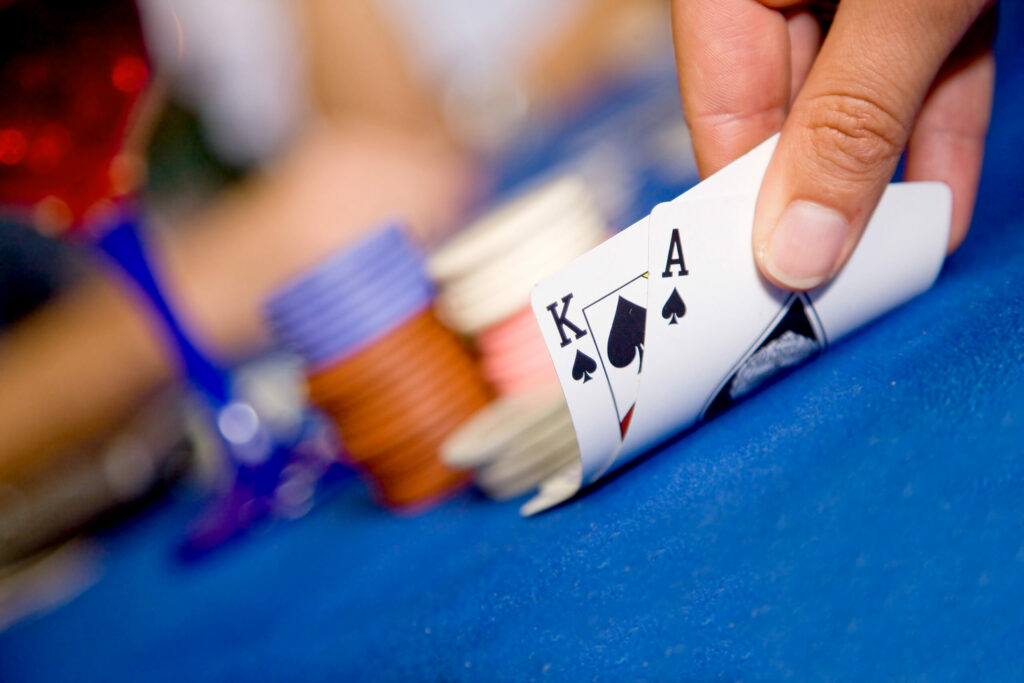
What Is The Dealer’s Upcard And Why Does It Matter?
At the start of a hand, everyone receives two cards. The dealer takes two as well, with one face up and one face down. The face-up card is the upcard, and it offers a snapshot of the dealer’s likely position. Table rules and the number of decks can affect how you interpret this, so always check the house rules before you play.
A low upcard, especially 4, 5, or 6, often puts the dealer at greater risk of busting because they must draw to at least 17. By contrast, a high upcard, such as a 10-value card or an ace, suggests the dealer is more likely to finish on a strong total. Mid-upcards like 7, 8, or 9 frequently lead to the dealer making a pat hand, which may require you to be more cautious when standing on marginal totals.
These are tendencies rather than certainties. Outcomes are never guaranteed, and the dealer’s action on a soft 17 (whether they hit or stand, depending on the table) can shift the probabilities. If the dealer peeks for blackjack with an ace or 10 showing, that information also shapes the hand before further decisions are made.
Your aim is to shape your choices around that clue, not just your own total, while recognising that basic strategy decisions reduce the house edge but do not remove it. Be mindful that optional wagers like insurance carry a higher house edge in most formats and should be considered carefully.
Play responsibly, set limits that suit your circumstances, and only stake what you can afford to lose. If the game stops being enjoyable, take a break.
This is the foundation for everything that follows. So how does the dealer actually play their hand from that starting point?
How Does The Dealer Play From The Upcard?
The dealer does not make personal choices; they follow fixed table rules that are displayed at the table. Their actions are automatic and not influenced by how players bet or react.
After showing the upcard, the dealer reveals the second card and then draws until reaching at least 17. On 16 or less they draw again. On 17 or more they stop. Some tables have the dealer stand on soft 17 (S17), while others require a hit on soft 17 (H17). You may also encounter differences such as “peek” (dealer checks for blackjack with a 10 or Ace up) versus “no-peek” rules. Always check the posted rules where you play.
The upcard does not change what the dealer does, but it does change how you should view the next few draws. Knowing the dealer is tied to those rules lets you plan your moves with more confidence and select a strategy chart that matches the specific game conditions (e.g., number of decks, S17/H17, surrender availability).
Please remember that all outcomes are based on chance and no strategy can guarantee a profit. Play within your means, set limits, and treat the game as entertainment.
With that in mind, here is how to adjust when the upcard looks weak. When the dealer shows a 2–6, they are more likely to bust because they must hit until 17. Players often stand on marginal totals and may double on 9–11 where the rules permit. If surrender is offered, it is typically less attractive against these weaker upcards, but always base decisions on the table rules and your own limits.
How Should You Play When The Dealer Shows 2-6?
When the dealer’s upcard is 2 through 6, they are more likely to need to draw multiple cards to reach 17, which increases the chance they will go bust. That gives you a measured opportunity to reduce risk and let the dealer make the mistake.
Remember that all outcomes are random and no strategy guarantees a profit. Basic strategy aims to minimise the house edge, not to eliminate it. Always consider the table’s specific rules before acting.
- Hard totals: Stand more often. In particular, stand on hard 13 to 16 against 2 to 6, and stand on hard 12 against 4 to 6. If your hard 12 faces a 2 or 3, hitting is usually better. Always stand on hard 17 or higher. If surrender is available, it is generally not used against a dealer 2 to 6.
- Doubling: It is often favourable to double 10 against 2 to 9, 11 against 2 to 10, and 9 against 3 to 6, subject to the table’s doubling rules (for example, whether doubling after a split is allowed, whether the dealer hits soft 17, and the number of decks). If doubling is not permitted in a given spot, take the next-best play (usually a hit).
- Splitting: Favour splits that strengthen weak starts, especially aces and eights. Consider splitting 2s and 3s against 4 to 7, 6s against 2 to 6, and 7s against 2 to 7 if splitting is permitted. Do not split 5s or 10-value cards. Check whether re-splitting and doubling after splits are allowed, as this can affect the correct move.
- Soft totals: With an ace counted as 11, look to double when the dealer is weak. Commonly, double A,2 or A,3 against 5 or 6, A,4 or A,5 against 4 to 6, and A,6 or A,7 against 3 to 6 if the rules allow; otherwise, hit or stand as appropriate (for example, A,7 will often stand against 2, and prefer to hit against stronger dealer cards).
The key idea is simple: avoid turning a decent position into a risky one when the dealer is already under pressure. Play disciplined, rules-aware basic strategy, set limits, and never risk more than you can afford to lose.
How Should You Play When The Dealer Shows 7-Ace?
A 7, 8, 9, 10, or ace usually points to a stronger dealer finish. Your aim is to improve your total to something that can genuinely compete, while managing risk sensibly and within your limits.
No approach guarantees a win. Outcomes are uncertain and the house retains an edge, so base decisions on the table rules and your hand type rather than hunches.
If late surrender is available, it can reduce losses against these strong upcards. Typical surrender spots include hard 16 (not 8-8) versus 9, 10, or ace, and hard 15 versus a 10, subject to house rules.
- Hard totals: With 12 to 16 against 7 through ace, you will usually hit to try to reach at least 17, accepting that bust risk is part of the trade-off. Stand on 17 or higher. Where allowed, consider surrendering hard 16 (excluding a pair of eights) versus 9, 10, or ace, and hard 15 versus 10, as this can be lower risk than drawing.
- Soft totals: Look to strengthen the hand because the dealer’s strong upcard reduces the value of standing early. Soft 18 is often not the end point here; you may hit against 9, 10, or ace, and you might stand versus 7 or 8 depending on the house rules. Avoid aggressive doubles with soft hands against 9, 10, or ace unless the table rules specifically support it.
- Doubles and splits: Be selective. Doubling 11 is still strong against most upcards, though doubling versus an ace can depend on whether the dealer hits or stands on soft 17. Doubling 10 is usually fine versus 9 but not versus 10 or ace. Splitting aces and eights remains sound; avoid splitting weaker pairs that are likely to leave you trailing against a strong dealer card. When in doubt, follow the table’s basic strategy chart for that ruleset.
Whether you press on or slow down also depends on whether your total is hard or soft, as the next sections explain. Always play within your budget, avoid chasing losses, and take time to confirm the table rules (number of decks, dealer hits/stands on soft 17, surrender availability) before you act.
How Do Hard Hands Change Versus The Dealer Upcard?
A hard hand has no ace counted as 11, so you have less flexibility if you draw a high card and risk going bust. That makes the dealer’s upcard even more influential. Basic strategy aims to reduce, not remove, the house edge, and specific decisions can vary with table rules and the number of decks.
Against dealer upcards of 2 to 6, the dealer is more likely to run into trouble by drawing. A common, lower-risk approach is to stand earlier and let the dealer resolve their hand. Standing on hard 13 to 16 is typical in these situations, while hard 12 stands against 4 to 6 but usually hits against 2 or 3.
For smaller hard totals, hard 8 or less is almost always a hit. Hard 9 often hits unless doubling is allowed against 3 to 6, in which case doubling may be preferred. Likewise, hard 10 or 11 frequently doubles against many lower dealer upcards when the option is available; if doubling is not permitted, take a regular hit.
Against 7 to ace, the plan flips. Because the dealer is less likely to bust with stronger upcards, hard 12 to 16 generally needs another card. If surrender is offered in your game, hard 16 versus a dealer 9, 10, or ace is often a surrender; without that option, a hit is usually taken. Hard 17 or more is usually strong enough to stand.
Always check the rules at your table and use a strategy chart appropriate to those rules. Never wager more than you can afford to lose, set limits, and remember that even correct play cannot guarantee a win.
How Do Soft Hands Change Versus The Dealer Upcard?
A soft hand includes an ace counted as 11 (for example, ace–6 for soft 17). Because the ace can also be counted as 1, you have added flexibility: you can take an extra card with a lower immediate risk of busting. This does not remove all risk after multiple hits, but it does create more opportunities to improve the total.
In many rule sets, this flexibility can make doubling attractive in specific spots. Always check the table rules first and apply basic strategy rather than instinct; outcomes are never guaranteed and will vary with rules such as the dealer standing on soft 17, the number of decks, and whether doubling after splits is permitted.
Against weaker dealer upcards, basic strategy typically aims to press a mathematical edge, where allowed. Soft 13 to soft 17 often double against dealer 4, 5, or 6 (and sometimes 3, depending on the house rules). This seeks to capitalise when the dealer is more likely to break, but it should only be taken when doubling is permitted and you are comfortable with the additional stake.
Soft 18 is a borderline total: it is commonly doubled against 3 to 6, stood against 2, 7, or 8, and hit against 9, 10, or ace. Soft 19 is usually a stand; a few games allow doubling soft 19 versus a 6, but only consider this where the rules explicitly permit it and you understand the added variance.
Against stronger upcards (9, 10, or ace), use the “softness” to improve rather than over-commit. Hitting soft hands until you reach at least soft 18 is standard, then adjust to the dealer’s card: continue hitting soft 18 versus 9, 10, or ace, and avoid speculative doubles in these tougher spots.
The same principles of pressure and flexibility carry over to splits and doubles more broadly. Align decisions with the specific table rules, follow a clear basic strategy chart for that game type, and remember that no approach can guarantee a win. Set limits, manage your bankroll, and only gamble what you can afford to lose.
How Should You Handle Splits And Doubles Against Different Upcards?
Splitting and doubling can influence a round substantially, but timing and table rules matter. Base your decisions on the posted house rules, the number of decks, and whether the dealer hits or stands on soft 17, as these factors change optimal play.
The following are general basic‑strategy guidelines, not guarantees. Variations may apply, so consult the table’s rules and adjust accordingly.
- In most games, split aces and eights. Splitting aces gives two strong starts (though many casinos allow only one card per ace), and splitting eights breaks up a weak 16 into hands that can improve. If re‑splitting is allowed, this guidance is even stronger.
- Avoid splitting 10s and 5s. A pair of tens already forms a strong 20 that typically performs well against any dealer upcard. Two 5s are often better treated as a hard 10 to double against weaker upcards if permitted; if doubling is not allowed, a regular hit is usually preferable.
- Consider splitting 2s and 3s against dealer 4 to 7, 6s against 2 to 6, 7s against 2 to 7, and 9s against 2 to 6 and 8 to 9. Skip splitting 9s against 7, 10, or ace. These splits tend to gain more value when double after split (DAS) is permitted; without DAS, be more selective.
- Double 11 against most upcards, noting that some rule sets recommend hitting rather than doubling against a dealer ace. Double 10 against 2 to 9, and double 9 against 3 to 6. Always verify which doubles are permitted at your table before committing extra chips.
- Look for soft double spots where allowed: for example, A,2 or A,3 against 5 or 6, and A,7 against 3 to 6 in many rule sets. If soft doubling is not permitted, take the next best line (usually a hit or stand per basic strategy).
If splitting, re‑splitting, or doubling is restricted at your table, adjust by favouring the next best option supported by basic strategy for that specific rule set and deck configuration. Where available, surrender can sometimes be a better alternative than forcing a marginal split or double.
Outcomes are never guaranteed, and past results do not predict the future. Keep stakes within your limits, take breaks as needed, and only play if it remains affordable and enjoyable.
Is Taking Insurance Worth It When The Dealer Shows An Ace?
When the dealer shows an ace, insurance is offered as a separate side bet that pays 2 to 1 if the hole card is a 10-value card. It can feel like protection for your main hand or even a natural blackjack, but it is an independent wager with its own odds and variance, and it does not change the outcome of your original bet.
For insurance to break even, roughly one in three unseen cards would need to be a 10-value card. In most multi-deck games the true proportion is lower than that, meaning the expected return is below 100% and the house retains an edge in the long run.
“Even money” offered when you hold a blackjack against an ace is simply insurance in another form, and over time it carries the same disadvantage for the player. Unless you are legally and confidently tracking card composition – something most players do not rely on – the maths remains unfavourable.
If your goal is consistent, responsible decision-making, declining insurance is usually a prudent choice while you focus on playing your main hand correctly against the ace upcard. Side bets generally carry higher house margins, outcomes are never guaranteed, and you should only wager what you can afford to lose.
When Does Deck Composition Affect Upcard Decisions?
Deck composition can matter most in games with very few decks, where the cards already seen meaningfully change what remains to be drawn. In single- or double-deck formats, this card-removal effect is stronger, so experienced players may make small, situational adjustments to borderline upcard decisions.
By contrast, in most contemporary casinos multiple decks, limited penetration, and frequent or continuous shuffling dilute these effects. Any edge from composition awareness is typically modest and inconsistent, and the house advantage remains.
If you are not intentionally tracking compositions, it is sensible to treat each hand as a new scenario and follow a clear, basic strategy tailored to the table’s posted rules. Keep your choices simple and consistent rather than chasing patterns.
Please remember that no approach can guarantee a win. Play for entertainment, set limits, and never wager more than you can comfortably afford to lose.
Prefer a quick takeaway you can apply immediately? The next section highlights the core points so you can make practical, low-effort decisions at the table.
Quick Cheat Sheet For Dealer Upcard Decisions
Need a fast reminder of what to do when you see the dealer’s upcard? Here’s a simple, basic-strategy overview to guide your decisions at a glance. It won’t guarantee wins, and outcomes remain random.
Always check the table rules (e.g., whether the dealer hits soft 17, doubling restrictions, or surrender availability), as these can affect the optimal play.
Dealer shows 2-6 (weak card):
Stand on hard 13-16, and on hard 12 against 4-6.
Hit hard 12 against 2-3 if standing is not advised by the table rules you follow.
Double 9 against 3-6, 10 against 2-9, 11 against 2-10 (only where doubles are permitted).
Split A,A and 8,8; consider splits on 2,2 and 3,3 against 4-7, 6,6 against 2-6, 7,7 against 2-7 (subject to re-split rules).
If surrender is offered, many players surrender 16 vs 9-10 and 15 vs 10; otherwise follow the standard hit/stand guidance above.
Dealer shows 7-Ace (strong card):
Hit hard 12-16, and stand on 17+.
Keep improving soft hands; soft 18 may hit or double against 9, 10, or ace depending on the table rules and allowed doubles. Soft 17 typically hits.
Split A,A and 8,8; double 11 against most upcards, and 10 against 2-9 when permitted.
Be mindful that some casinos restrict doubling after splits or on certain totals; adjust if those rules apply.
Insurance:
Avoid taking it. Insurance is a separate side bet that generally increases the house edge and is not required to play the main hand.
Use this cheat sheet as a quick reference only. Set clear limits before you start, take regular breaks, and never chase losses. Gambling should be fun; stop if it stops being enjoyable. 18+ only.
Common Mistakes Players Make With The Dealer Upcard
A frequent error is focusing only on your own total and ignoring what the dealer shows. The upcard frames the risk of the hand and influences optimal play, so factor it in alongside whether your hand is hard or soft, and how many cards you hold.
When you treat the upcard as essential context, decisions such as hitting, standing, doubling, splitting, or even surrendering (if offered) become more consistent. You are not predicting outcomes, but aligning choices with probabilities.
Another trap is being too cautious when the dealer has a weak upcard (typically 2–6). Standing on hands that are better improved, skipping recommended splits, or passing on suitable doubles can forgo long‑term expected value. Follow a basic strategy that matches your table rules to identify these opportunities.
Remember that “weak” does not mean guaranteed. Variance is part of the game, and even correct doubles or splits will sometimes lose. Make decisions you are comfortable with, stay within your limits, and avoid chasing results from previous hands.
The opposite happens against strong upcards (7 through Ace). Some players freeze on middling totals or make desperate moves that do not fit the situation. In these spots, tighten your plan, take the hit when the maths supports improvement, consider surrender where available, and avoid speculative splits or doubles that increase exposure without a sound basis.
It can help to think in ranges: against strong dealer cards, aim to improve weak and marginal hands; against weak dealer cards, press edges that are supported by basic strategy. If a decision is borderline, patience and bankroll management matter more than forcing action.
Finally, drifting from a proven strategy because of a hunch tends to be costly over time. If in doubt, refer to a basic chart that matches your specific rules (number of decks, dealer hits/stands on soft 17, doubling after split, surrender options) and let the upcard guide you.
No strategy can remove the house edge or guarantee success on any hand. Keep your play disciplined and consistent, set time and spend limits, take breaks, and only stake what you can afford to lose. If the game stops being enjoyable, step away.
**The information provided in this blog is intended for educational purposes and should not be construed as betting advice or a guarantee of success. Always gamble responsibly.