
Single Number Roulette: Straight Up Bet Explained & Odds Truth
Single Number Roulette: Straight Up Bet Explained & Odds Truth
Ever wondered what it really means to place a single number bet in roulette? Maybe you’ve seen someone drop a chip on one number and thought, is it worth the risk?
Straight up bets are simple, bold, and offer the highest payout on the table, but the chance of landing them is small. Knowing how they work, what they pay, and the real probabilities helps you decide if they fit your approach.
Read on for a clear, no-nonsense look at straight up bets, from table placement to house edge, with plain examples along the way.
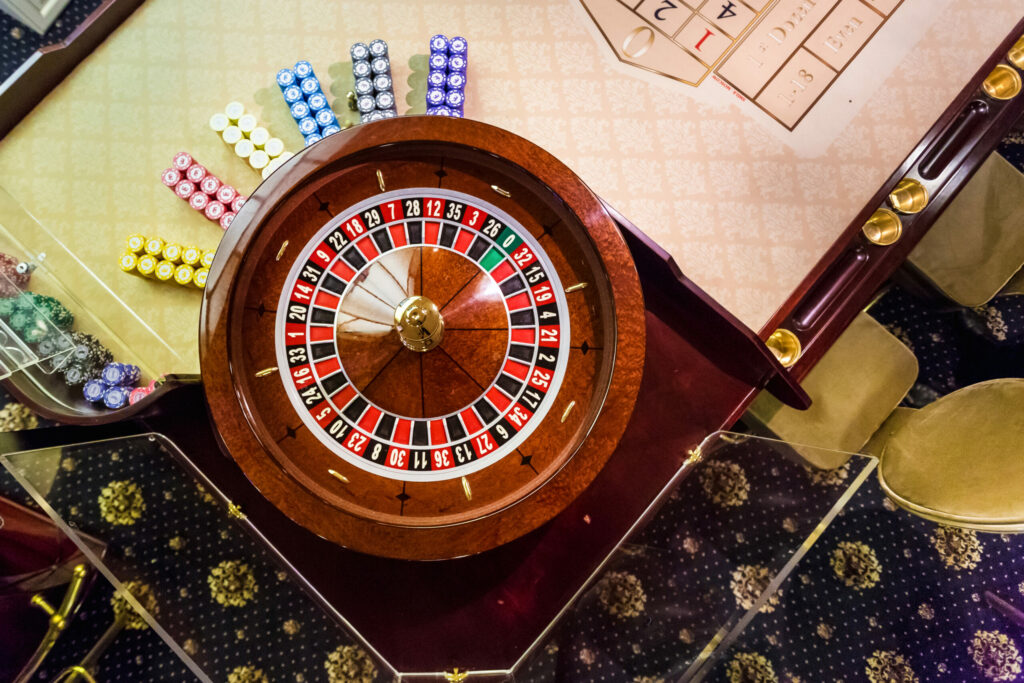
What Is A Straight Up Bet In Roulette?
A straight up bet is the most direct wager in roulette. You place your chip squarely on a single number on the layout, such as 7, 21, 0, or (where offered) 00. If the ball lands on that exact number, the bet wins; if not, the stake is lost. On most tables the standard return is 35 to 1 plus your original stake, although table rules and variants can differ, so always check the paytable.
Odds vary by wheel type. On a European wheel with 37 pockets (0–36) a straight up bet has a lower hit rate than on many other bets; on an American wheel with 38 pockets (0–36 and 00) the chance is lower still. The house edge applies on every spin and no staking method can change the underlying probabilities.
There is no splitting or sharing with neighbouring numbers. Your chip must be centred within the chosen number’s square; if it touches a line it becomes a different bet (for example, a split). It is a focused, all-or-nothing choice suited to players who accept long odds in exchange for the highest single-number payout available on the main layout.
Always play responsibly: set limits, only wager what you can afford to lose, and treat roulette as entertainment. Outcomes are random and past spins do not influence future results. If you are unsure about rules or payouts, ask the dealer or consult the table information before placing a bet.
So what does that look like on the layout in practice?
How Do You Place A Single Number Bet On The Table?
On the betting layout, each number sits in its own square. A straight up bet is one chip placed cleanly in the centre of that square, not touching any line or corner. If a chip strays onto an edge, the dealer may read it as a split or another bet type, so place it neatly or ask for clarification at a live table.
At a live table the dealer will clearly announce when bets are open and when they are closed. Until “no more bets” is called, you may add, remove, or adjust chips. Online, you will usually see a timer and clear buttons to confirm or clear your stake, and the interface prevents changes once betting closes.
When the spin resolves, outcomes are random and independent of previous results. If the ball stops on your chosen number, the bet is settled as a win in line with the table rules; if not, your stake is collected. Settlement details and payout rules are shown in the game information.
Table limits can vary by venue and game type, so it is worth checking both the minimum and maximum before you start. Some tables also set different minimums for straight up bets compared with other bet types, which can affect how you size your chip placement.
Only stake what you can afford to lose, and consider setting time and spend limits. Roulette outcomes are based on chance, and no betting pattern can influence where the ball lands.
With placement sorted, the next thing to know is what it pays, and how often it lands. You will find the return rules and relevant statistics in the paytable or help section for the specific table you are playing.
What Are The Payouts And Odds For A Straight Up Bet?
A straight up bet pays 35 to 1. Stake £1 and, if your number hits, you receive £35 in winnings plus your £1 stake back, for £36 returned. The same ratio applies whatever you stake, although table limits will cap how much you can place on a single number.
This 35:1 return is a fixed payout used by most roulette tables. It is lower than the true odds of the bet, which is how the house edge is created and why the game can be profitable for the casino over time.
Your chance of landing a single number depends on the wheel:
- European roulette has 37 numbers in total (0–36), so the chance is 1 in 37, or about 2.70%.
- American roulette has 38 numbers (0, 00, 1–36), so the chance is 1 in 38, or about 2.63%.
The payout is high because the hit rate is low. Keep stakes sensible, as losses can build quickly when the number does not come up for a while. Outcomes are random and independent; previous spins do not influence the next result, and no betting system can change the underlying odds.
For context, the house edge on a straight up bet is about 2.70% on European wheels and about 5.26% on American wheels. Over the long run this means the average return to player (RTP) is lower on American roulette.
Always play responsibly: set limits, never chase losses, and only gamble with money you can afford to lose.
Let’s look a little closer at how often these wins actually occur, and what that means for your bankroll from one session to the next.
How Likely Is A Straight Up Bet To Win?
As noted above, the chance of a single number landing is about 2.7% on a European wheel and about 2.6% on an American wheel. In plain terms, wins are infrequent. Over a long run of spins, you may see only a handful of hits, and sometimes none over short stretches. That rarity is exactly why the payout is set so high.
Each spin is independent, so previous results do not influence the next outcome. Long losing or winning streaks can occur simply through variance, and no strategy can change the underlying odds or guarantee a result.
Roulette has a house edge, meaning that over time the expected return is negative. Consider this a game of chance and entertainment, set sensible limits, and never chase losses. Only stake money you can afford to lose.
House Edge And Expected Value Explained
The house edge is the built‑in advantage the casino holds over the long term. It represents the average percentage of each wager the house expects to retain over many spins, and it comes from the extra green pocket or pockets on the wheel. Individual spins are random and independent, so short‑term results can vary widely from this average.
On a European wheel with a single zero, the edge is around 2.70% because there are 37 pockets in total. On an American wheel with both 0 and 00, it rises to roughly 5.26% across 38 pockets, increasing the chance that non-winning outcomes occur.
Expected value turns that percentage into pounds and pence. For a £1 straight up bet on a European wheel, the long‑run average works out at a loss of about 2.7p per pound staked. On an American wheel, it is closer to 5.3p per pound.
This figure is an average over many bets, not a prediction for your next spin. You can still win on any given spin, but across a large number of spins the results tend to drift towards the edge, so the game tilts modestly towards the house. No betting system removes or reduces this built‑in margin.
This is also why the wheel design matters. The number of zero pockets and any table rules directly affect the probabilities, and therefore the return to player (RTP). As a guide, European roulette pays back about 97.30% over time, whereas American roulette pays about 94.74%.
Odds do not change based on previous outcomes, and past results do not influence future spins. Always set limits, never chase losses, and only gamble with money you can afford to lose.
How Does European Single Zero Differ From American Double Zero?
European roulette has one zero, so there are 37 possible outcomes. American roulette adds 00, creating 38. That extra pocket slightly reduces the probability of any given bet landing and increases the house edge; as a guide, the house edge is typically about 2.70% on single zero and about 5.26% on double zero, assuming standard rules.
Payouts for winning bets are usually the same on both wheels, but the extra pocket changes the underlying odds. This means the expected return to the player is lower on the double zero layout, even though individual outcomes remain entirely random and cannot be predicted.
If you have the option, the single zero version generally offers a lower house edge across common bet types, including straight up wagers. The difference per spin is modest, yet over many spins it can lead to a noticeably higher expected loss on the double zero game. No staking plan or strategy can remove the built-in house advantage.
Always check the table rules, as features like La Partage or En Prison on some single zero tables can further affect the house edge on even‑money bets. Play responsibly, set sensible limits, and remember that roulette is a game of chance with outcomes that are independent of previous results.
How A Straight Up Bet Compares With Other Roulette Bets
A straight up bet carries the biggest payout on the layout, but with the longest odds. On a single‑zero wheel there are 37 pockets, so a single number has a 1 in 37 chance of landing, with a standard payout of 35 to 1. This high potential return comes with higher volatility and a greater likelihood of losing spins.
Broader wagers, such as red or black, odd or even, or the dozens and columns, win more often but pay less. Even‑money bets pay 1 to 1 and typically cover 18 numbers, while dozens and columns pay 2 to 1 and cover 12 numbers. Remember that zero is not included in these outside bets, so it generally results in a loss on those wagers.
So the trade‑off is clear. Straight up bets deliver occasional large returns, whereas outside bets provide more regular, smaller outcomes. Neither option is inherently better; it depends on your appetite for risk and how much fluctuation you are comfortable with in your bankroll.
All roulette outcomes are random and independent, and the house edge applies across all bet types. No staking system or pattern can guarantee a profit or change the underlying return to player. Consider setting limits, taking breaks, and viewing play as entertainment rather than a way to make money.
With that contrast in mind, it helps to clear up a few common myths. No number is “due”, previous results do not influence future spins, and hot or cold streaks do not alter the probabilities. Also be aware of table minimums and maximums, which may restrict progression strategies and affect how you manage your bets.
Common Misconceptions About Straight Up Odds
It is true that every number has the same chance on each spin. Neither the wheel nor the ball has a memory, and previous results do not make any number “hot” or “cold”.
What is not true is the idea that a number becomes more likely after a long absence. That belief is the gambler’s fallacy. Each spin is independent, so no number is ever due, and a recent run of outcomes does not change the probability of the next result.
Another misconception is that sticking with the same number will guarantee a result eventually. Roulette outcomes are random, and long streaks without a hit can and do occur.
There is no certainty that a chosen number will land within your budget or time at the table, and chasing losses in the hope of a catch-up hit increases risk. Never assume a win is imminent.
Betting systems and streak-chasing do not change the underlying probabilities either. They may alter stake patterns, but they cannot influence where the ball settles or overcome the house edge.
Systems that increase stakes after losses can quickly become unaffordable, and table limits can prevent recovery even after a win. Only stake what you can afford to lose, set time and spend limits, and take breaks. Gambling should be fun, not a way to make money; if it stops being enjoyable or affordable, stop and seek support.
Practical Betting Examples And Simple Maths
A simple example shows how the numbers play out. Place £2 on 17 in European roulette. There are 37 pockets, so the chance of a single-number hit is 1 in 37. If 17 lands, the 35:1 payout means you win £70 and also receive your £2 stake back, so £72 is returned to you. If it misses, you lose the £2 stake.
Across ten spins at £2 each, your total outlay is £20. If your number hits once, you receive £72 on that one spin. Net result: £72 returned minus £20 staked, a profit of £52.
If it does not hit at all in those ten spins, you are down £20. You could also hit more than once or not at all; results can vary widely because the hit rate is low, each spin is independent, and outcomes are random.
Over time, the house edge applies. In European roulette, the typical return to player is about 97.3%, which means an average expected loss of roughly 2.7% of stakes in the long run. On a £2 straight-up bet, the expected loss is about 5p per spin, and around 54p over ten such spins. These figures are averages, not predictions for any given session.
These examples are illustrative only and are not a guide to future results. Set a budget you can afford to lose, avoid chasing losses, and consider taking breaks. With the arithmetic in mind, accuracy on the layout matters—there is no need to rush, and only place bets you understand and are comfortable with.
Table Layout Tips For Reading Numbers Quickly
Roulette layouts follow a familiar pattern. Numbers 1 to 36 are arranged in three columns and twelve rows, with 0 at the top and, in American roulette, 00 alongside it. Odd and even values are spread across the grid in a consistent order from table to table, so once you learn the structure it feels the same wherever you play.
Some layouts also display the numbers with their usual red or black colour backgrounds, which can help you orient yourself more quickly. This visual consistency is there to make placement clearer; it does not change the game rules, the house edge, or your chances of winning.
If you are scanning for a single number, move methodically column by column rather than darting around the layout. A steady sweep is easier on the eye and reduces the chance of skipping past your target. Take your time—there is no benefit to rushing—and ask the dealer for clarification in a live setting if you are unsure where a bet can be placed.
The outside areas are for group bets, such as red/black, odd/even, high/low, dozens, and columns. When you are focused on a straight-up wager, you can ignore those sections and concentrate on the inside grid. Always check the table’s bet limits and any specific house rules before placing chips.
Before you play, take a moment to note where your favourite numbers sit and how they relate to nearby squares. Familiarity speeds up placement and helps you avoid misclicks or misplaced chips. This is for clarity and convenience only and will not influence outcomes, which are random.
Gamble responsibly: set a budget, use available limits and time-outs, and never stake more than you can afford to lose. Efficient bet placement can make the experience smoother, but it does not improve your odds or guarantee a result.
**The information provided in this blog is intended for educational purposes and should not be construed as betting advice or a guarantee of success. Always gamble responsibly.