
How Do Bookies Set Odds? Bookmaking Explained for Punters
Most people have seen betting odds, but not everyone knows how bookmakers decide on those numbers. The process involves careful calculation, analysis, and planning rather than a quick guess.
Understanding how odds are worked out can help punters make more informed decisions and see where their bets fit within the wider market.
This blog post explains how bookmakers set odds, what those odds really mean, how margins work, why prices move, how in-play markets are updated, and some common myths worth clearing up.
Read on to learn more.
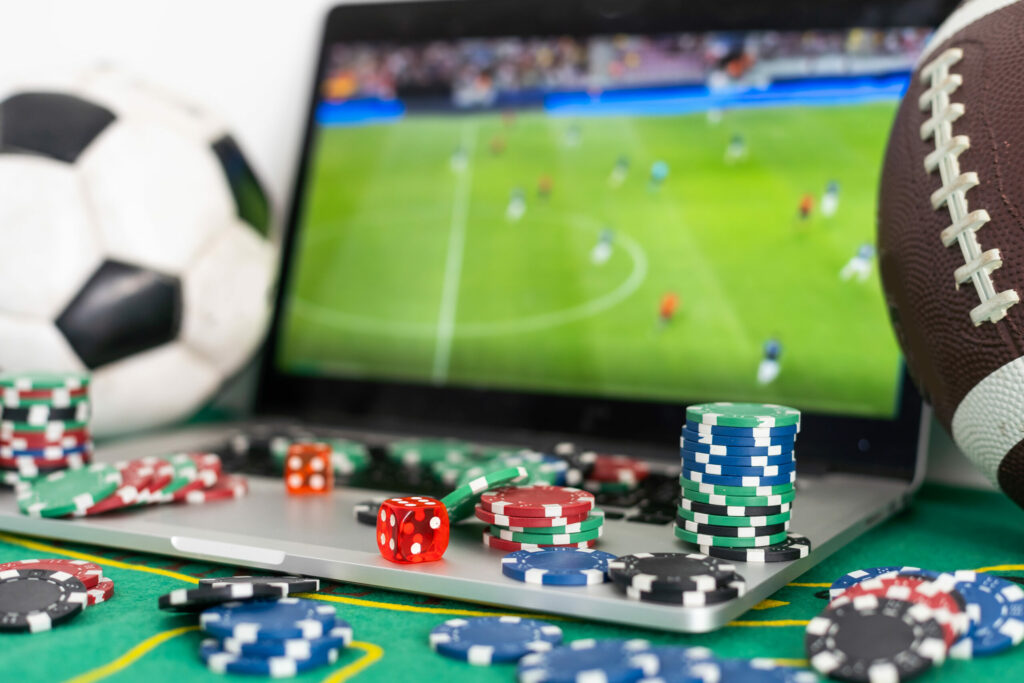
What Do Betting Odds Actually Mean?
Betting odds show how much a punter may receive if a bet wins, and they also reflect how likely the bookmaker thinks an outcome is. In other words, odds are a way of expressing probability in a format that is easy to read.
In the UK, odds often appear as fractions, like 2/1 or 5/2. At 2/1, a £1 stake would return £2 profit plus the original £1 if the bet is successful. Decimal odds show the total return from a £1 bet, stake included, so 2/1 would be written as 3.00.
Smaller odds indicate a higher estimated chance of the outcome; larger odds indicate a lower estimated chance. The key idea is that every price carries an implied probability of the result happening.
So, how do bookmakers turn those implied chances into the prices you see on screen?
How Do Bookmakers Convert Probability Into Odds?
Bookmakers start with a view on how likely a result is, usually as a percentage. If they rate a football team as having a 50% chance of winning, that figure becomes the basis for the price.
To convert a percentage into decimal odds, divide 100 by the probability. A 50% chance gives 100 ÷ 50 = 2.00. Fractional odds describe the same thing in a different format: a 50% chance is 1/1, often called evens. Lower probabilities produce bigger numbers, reflecting a less likely outcome.
These simple conversions turn underlying percentages into prices that punters can compare across markets. But the prices you see are not just raw probability.
Bookmaker Margin And Overround Explained
Every bookmaker builds a margin into their market, often called the overround. It is calculated by adding together the implied probabilities of all possible outcomes and seeing how far the total sits above 100%.
In a two-outcome event, fair prices might add up to exactly 100%. A bookmaker, however, might price the same event so the implied probabilities total 104% or 105%. That extra few percent is their margin.
The margin does not decide individual outcomes, and it does not guarantee a result on any single bet. It helps the bookmaker cover costs and manage long-term profitability across many markets.
How Bookies Set Opening Lines
Opening lines are the first public view of an event’s prices. They are built from a mix of data, analysis, and professional judgement before the market reacts.
Bookmakers study relevant factors such as recent form, injuries, styles of play, match-ups, and historical results. Statistical models and specialist tools help turn that research into starting prices. For high-profile events, they also keep an eye on industry prices to avoid straying too far from the wider market without good reason.
Once those lines go live, early bets provide useful feedback. If the pattern of wagers suggests something has been missed, or new information comes out, the opening lines move accordingly.
Behind those first prices sits a lot of data. That brings us to the tools bookmakers rely on most.
How Bookmakers Use Data And Models To Set Odds
Data is central to modern bookmaking. Historical results, team and player metrics, schedule and travel demands, playing conditions, and expert insights all shape the initial view. For some sports, variables such as pace of play, pitch conditions, surface type, or course layout are also factored in.
Mathematical models combine these inputs to estimate probabilities. As fresh information arrives, those models are updated so the prices stay aligned with the latest picture. Sophisticated software processes large volumes of data quickly, while traders apply context and experience to sense-check what the numbers are saying.
The end result is a market that reflects current information and, as discussed earlier, includes a margin so the bookmaker can run a sustainable book.
Why Do Odds Move Before A Game?
Prices often shift in the build-up to a match or race as information changes. Team news, injuries, suspensions, tactical adjustments, and even weather can all affect how likely an outcome appears. If a key player is ruled out or conditions favour a particular style, the market reacts and the odds move.
Betting activity also matters. If a lot of money backs one outcome, the bookmaker may shorten that price and lengthen alternatives to balance potential payouts. The aim is not to predict the result but to manage exposure while reflecting the most accurate view of the event.
Those shifts are not only responses to news; they are part of how firms manage their overall position.
How Bookies Manage Risk And Liability
Bookmakers continuously track how much is staked on each outcome to understand their liability, which is the amount they might need to pay if that outcome lands. If too much risk builds up on one side, they adjust prices to encourage bets on the other outcomes and bring the book back towards balance.
Beyond price moves, some firms reduce liability by hedging, such as backing certain outcomes elsewhere or on exchanges. Technology flags unusual betting patterns in real time, while traders step in with manual adjustments when needed.
Well-managed liability helps bookmakers keep markets available and prices stable, even when opinion or news flow is one-sided.
How Are In-Play Odds Calculated?
In-play markets update while the action is unfolding. Live data feeds track the score, game state, time remaining, substitutions, bookings, injuries, and other key moments. Models translate those inputs into a constantly refreshed view of the probabilities.
Traders monitor the event and the market alongside the models. If something major happens, betting on a market may be paused while prices are recalculated. During fast, pivotal moments, updates can be rapid, and prices may change several times within a minute.
This blend of automation and human oversight is designed to keep in-play odds aligned with the state of play as it evolves.
Can Punters Use Odds To Find Value?
Some punters look for “value” by comparing their assessment of a result with the implied probability in the odds. If the odds imply a 40% chance but a punter’s analysis suggests nearer 50%, that gap may be seen as potential value. For example, decimal odds of 2.50 imply 40% (100 ÷ 2.50). If a bettor believes the true chance is higher, they may judge the price to be favourable.
Spotting value consistently is difficult. As explained earlier, prices are built from extensive data and include a margin. Any personal view needs to be well reasoned and grounded in the specifics of the sport or event.
If you choose to bet, set a personal budget and stick to it.
Common Myths About How Bookies Set Odds
There are a few myths worth clearing up. One is that bookmakers simply guess or rely on secret information. In reality, they use data, models, and expert analysis to price markets, then adjust as new information and betting patterns emerge.
Another myth is that bookmakers know the outcome in advance. They do not. Their objective is to balance their books across outcomes, not to predict the result with certainty.
Some believe odds only move to “trap” punters. In practice, price changes mainly reflect changing information and the need to manage liability, as outlined earlier.
It is also common to hear that certain systems can beat the bookmaker consistently. Bookmakers include a margin and use sophisticated tools to keep prices efficient, so long-term success is challenging.
If gambling starts to affect your well-being or finances, seek help early. Organisations such as GamCare and GambleAware offer free, confidential support. Betting should always stay within your means and fit comfortably around the rest of your life.
**The information provided in this blog is intended for educational purposes and should not be construed as betting advice or a guarantee of success. Always gamble responsibly.