
How Casinos Make Money on Blackjack: House Edge Analysis
Blackjack is one of the most popular table games in the UK, often seen as more approachable than certain others. Despite this, casinos continue to generate steady income from it. The reason lies in a built-in principle, the house edge, that subtly influences the outcome of every hand.
In this post, we will look at that principle in detail, examine how certain rules affect it, consider how player decisions interact with it, and explore whether casinos ever experience sessions that go against them.
Keep reading to understand the mechanics behind blackjack and the numbers that underpin it.
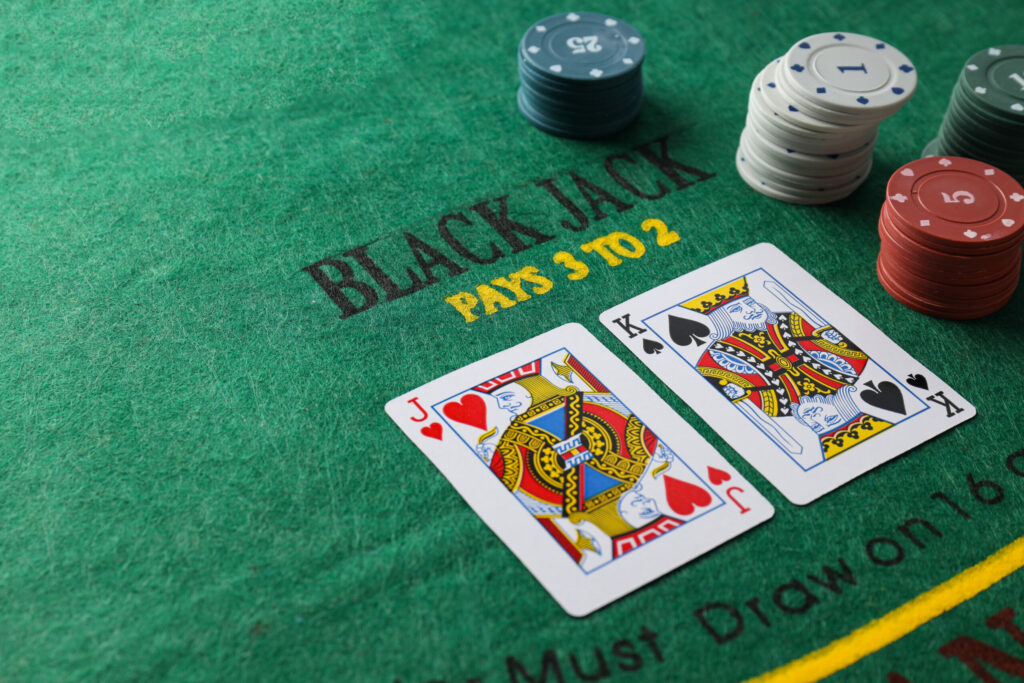
Why Do Casinos Always Win on Blackjack?
Casinos do not win every hand, but the design of blackjack naturally tilts outcomes in their favour. One particular feature—outlined briefly here—is central to that tilt: the dealer acts after players. This sequencing is more influential than it might first appear.
To see why it matters, consider a scenario where a player goes over 21. If you’re playing and this happens, the hand ends for you immediately. The dealer’s cards are irrelevant at that moment. That early conclusion shifts many outcomes across countless rounds.
Several surrounding rules reinforce this effect. Pushes return the stake but not a gain, showing that neutral outcomes do not shift results towards the player. Potential payouts for player blackjacks are clearly defined, but do not offset the rule that players act before the dealer.
The dealer follows fixed actions, while players make individual decisions each hand. These decisions may influence outcomes either way, and repeated mistakes gradually contribute to the casino’s overall return.
A player who effectively implements optimal basic strategy may reduce the house’s mathematical advantage to around 0.5-1% but cannot remove it under typical casino conditions. That built-in margin is called the house edge, which will be described next.
What Is the House Edge in Blackjack?
Think of the house edge as a numerical advantage the casino holds across many wagers, expressed as a percentage of each pound put into play. It is not a guarantee of the next hand’s outcome; instead, it becomes visible only over extended play.
Under common European and UK rules, and if you choose actions based on optimal basic strategy, as mentioned earlier, the house edge often sits roughly between 0.5% and 1%. Certain rule sets lower it slightly, while others increase it. Non-optimal decisions may lift it notably above 2%.
Although the house edge appears small, repeated wagers over longer sessions allow it to exert noticeable influence. A table that sees £100,000 in total wagers during an evening would generate an expected £500 at a 0.5% edge. Repeated across days and months, those small percentages form reliable income for the operator.
This concept becomes clearer after examining how potential payouts, odds and rule variations contribute to the numbers.
Calculating Payouts and Odds
A natural blackjack generally pays 3 to 2, meaning a £10 stake returns £15 in winnings. This is one of the strongest outcomes available to players. If the payout shifts to 6 to 5, the same result provides less, increasing the casino’s overall advantage.
Most other winning hands typically pay 1 to 1, keeping things straightforward. Pushes return your stake and do not move outcomes in the player’s direction; they simply pause the process.
The most influential rule, however, is the immediate conclusion of a hand that exceeds 21. If you choose to play and push too far on a weak total, your hand ends at once, even if the dealer’s cards later move the same way. This early ending contributes significantly to the casino’s overall return.
Side options also matter. Insurance usually pays 2 to 1 but tends to lower the player’s expected return over repeated use.
All these points prepare the ground for understanding how rule adjustments influence the underlying advantage.
Common Rule Variations That Affect House Edge
We have introduced the idea that small rule changes alter the casino’s advantage. Here, the influence of specific variations becomes clearer.
A 6 to 5 payout on a natural blackjack increases the house edge substantially—often by about 1.2%. A dealer hitting on a soft 17 increases it slightly more, usually by 0.1% to 0.2%.
The number of decks also shapes results. With additional decks, beneficial combinations for players appear less often. Many casinos therefore use four, six or eight decks, partly because they create more uniform playing conditions and help counter card-tracking methods.
Other rules—such as whether doubling is available on any two cards, whether re-splitting aces is allowed, and whether late surrender exists—alter the house edge by small increments. More player freedoms often narrow the edge; limitations widen it.
These rule-based changes form the background on which player decisions operate.
How Does Player Decision Affect Casino Earnings?
If you’re playing and consistently follow established decision-making guidelines, the house edge may remain relatively modest under favourable rules. But frequent deviations move results away from theoretical expectations. Standing too early, doubling in poor situations, or misjudging soft totals increase losing outcomes. These incremental slips accumulate over time.
Side bets influence outcomes even more. Many have considerably higher house edges than the main blackjack hand. Even occasional use by players meaningfully increases the casino’s overall return from a table. Common side bets like Perfect Pairs or 21+3 often exceed 3%, and some surpass 10%, giving casinos an additional source of income.
Understanding how individual decisions influence outcomes leads naturally to the final question.
Can Casinos Lose Money on Blackjack?
Yes—during any single evening or session, results can swing against the house. A busy table may pay out more than it receives for a while, and if you play, you might finish a session ahead. This kind of variation is a normal part of the game.
Over the longer term, however, the structure of blackjack and the mathematics behind it tend to pull results back towards the casino’s built-in advantage. This is why operators can speak with confidence about their long-run expectations, even if the picture fluctuates in individual sessions.
Some experienced players try to reduce the house edge by paying close attention to how the game unfolds. In response, casinos apply well-established safeguards—such as using multiple decks, shuffling regularly, close supervision, and, in the UK and elsewhere, the right to refuse service—to ensure that no approach can realistically overturn the house’s long-term advantage. These measures help maintain the edge described throughout this blog post.
If you choose to play blackjack, it’s important to do so with responsible gambling practices in mind. Never stake more than you are comfortable losing, set personal limits that fit your circumstances, take regular breaks, and keep betting as an occasional form of entertainment rather than a routine activity.
If gambling starts to affect your well-being or finances, seek support as early as possible. Independent organisations such as GamCare and GambleAware offer free, confidential help for anyone who needs it.
Play Blackjack Online at Ivy Casino
At Ivy Casino, we offer blackjack online in a licensed and regulated environment. We are authorised by the UK Gambling Commission (UKGC), and all our games are independently tested to ensure they work as intended.
You can choose from live dealer tables for real-time play or Random Number Generator (RNG) versions for a quicker, digital experience. The rules are clearly displayed, and table options are designed to suit a variety of experience levels.
We provide features such as deposit limits, time-outs and self-exclusion so you can manage how you interact with our games.
If you’d like to explore blackjack at Ivy Casino, feel free to create an account, deposit some funds to play with and see what we have to offer at your own pace.
**The information provided in this blog is intended for educational purposes and should not be construed as betting advice or a guarantee of success. Always gamble responsibly.