
Does Basic Strategy Really Work in Blackjack? Evidence & Explanation
Blackjack has long been a favourite at UK casinos, both online and in person. It is often said that a little knowledge can go a long way, and basic strategy sits right at the heart of that idea.
You may have seen charts and tactics that claim to improve your results. So what actually holds up when the numbers are tested, and what does not?
In this guide, we look at the evidence, explain how basic strategy changes the house edge, and show how to use it sensibly without overcomplicating things.
What Is Basic Strategy In Blackjack?
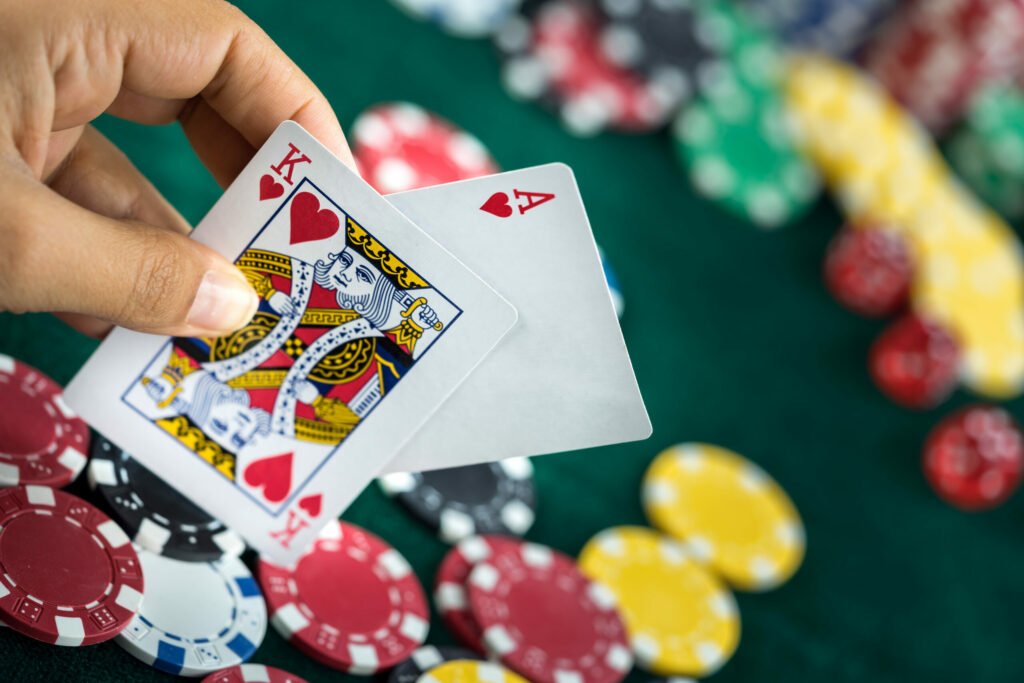
Basic strategy in blackjack is a defined set of decisions for every possible player hand against each dealer upcard. It is grounded in mathematics and probability, rather than hunches or guesses, and aims to guide you towards the statistically strongest play in each situation.
The strategy maps your total and the dealer’s visible card to an action such as hit, stand, double down, or split. While it cannot guarantee a win on any single hand, it is designed to minimise the house advantage over time when compared with random or impulsive choices. Outcomes remain subject to chance, and the house retains an edge even with perfect play.
Exact recommendations depend on table rules, such as whether the dealer stands on soft 17, whether doubling after a split is permitted, the number of decks in use, and surrender availability. Strategy charts are tailored to these variations, so always match the chart to the rules of the game you are playing.
You can find clear strategy charts online and use them as learning aids. Many players practise away from the table or in low‑stakes formats to build confidence and consistency. Do not rely on external tools during live play where prohibited by venue or operator terms; instead, aim to memorise the core decisions before you sit down.
Used correctly, basic strategy reduces the house edge compared with ad‑hoc decision‑making. Under common rules, this can bring the house advantage down to around 0.5% to 1%, though the exact figure varies by game conditions and your accuracy in applying the chart. It helps you make consistent choices, manage variance more calmly, and avoid costly errors, but it does not remove risk.
If that is the logic, how much does it move the numbers at the table? Broadly, it trims the house edge rather than turning it in your favour, supporting more sustainable play when combined with sensible limits and responsible gambling habits.
How Much Can Basic Strategy Reduce The House Edge?
Playing without any plan gives the casino a larger advantage, known as the house edge. In many common game setups, that edge can be around 2% or higher if decisions are made at random or by feel. In practical terms, that is about £2 expected loss per £100 wagered, calculated as a long‑term average rather than a promise for any single session. Actual outcomes will vary from hand to hand, and the exact figure depends on the table rules and the bets you choose.
Follow basic strategy correctly and the house edge typically drops to around 0.5%, sometimes a touch lower with player‑friendly rules such as the dealer standing on soft 17, the ability to double after splitting, or blackjacks paying 3 to 2. By contrast, less favourable rules (for example, blackjacks paying 6 to 5) increase the edge. When applied consistently, basic strategy brings the expected loss closer to about 50p per £100 wagered over time, which is a meaningful shift across hundreds or thousands of hands, but it is still not a guarantee of winning.
This difference does not change the fact that outcomes vary in the short run, but it does narrow the gap to the best return permitted by the rules. Basic strategy cannot eliminate the house edge; it simply helps you avoid costly mistakes and get closer to the published return‑to‑player for that ruleset.
Whether this reduction is just theory or proven in practice has been addressed extensively: the figures come from established probability analysis and large‑scale computer simulations using defined rules. These results describe expected performance over the long term and should be used as guidance only.
Always play responsibly. Set limits, never stake more than you can afford to lose, and view gambling as entertainment rather than a way to make money.
What Evidence Shows Basic Strategy Works?
There is decades of hard evidence behind basic strategy. Researchers and analysts have run computer simulations that play millions of hands under fixed rules. These models replicate shuffling, deal sequences, and decision points to remove guesswork and isolate the effect of player choices.
By comparing outcomes from players who follow basic strategy with those who deviate from it, the pattern is consistent: correct decisions lower the average amount lost to the house over the long term. This is a statistical effect across large samples, not a promise of short‑term wins.
Crucially, basic strategy does not eliminate the house edge or guarantee profit. It simply minimises expected loss for the stated rules. Variance still drives streaks in either direction, so short‑term results can differ markedly from the long‑run average.
You can also see this in how game providers publish return to player figures for blackjack variants. These RTP numbers are calculated on the assumption that the player makes optimal decisions and that specific table rules apply.
RTP is a theoretical, long‑term average and not a prediction of what any individual will experience. Rule changes—such as the number of decks, whether the dealer hits on soft 17, or the availability of doubling and splitting—alter the RTP. If players stray from optimal decisions, the return falls and the house edge rises, which again supports the value of playing by the chart.
Casinos are well aware of these facts. They build their expectations around typical player behaviour and rule sets, not on basic strategy being a miracle cure. The edge remains, and the game’s outcomes are still random on a hand‑by‑hand basis.
To understand why the numbers are trusted, it helps to look at how simulations stack up against live play. Over very large samples, audited results and computer models align closely under the same rules and assumptions, while shorter samples can show wide swings before converging.
Nothing in basic strategy can overcome the mathematical advantage built into the game. Always gamble responsibly, set limits, and only play if you are over 18 and can afford to lose the money at risk. If it stops being fun, stop.
How Reliable Are Computer Simulations Compared With Live Play?
Simulations are reliable for testing strategies because they apply the same rules used at the table and can run through enormous numbers of hands without fatigue or recording errors. They track every decision and outcome according to the underlying maths, so the averages they produce tend to be stable and repeatable over very large samples. That said, simulations describe long‑run expectations under fixed assumptions; they do not predict specific future results or remove the role of chance.
Live play, however, introduces human factors. Players may misread a hand, act under time pressure, or let emotions influence a decision, especially after wins or losses. Distractions, table speed, and fatigue can all increase mistakes, and even small deviations from optimal choices can change results. Keeping a clear head and taking breaks can help reduce errors, but variance will still occur.
When the rules match and the same decisions are made, live games and simulations converge on similar long‑run averages. Differences in rule sets, shuffling procedures, payout tables, or deck penetration can shift those averages, and short‑term variance means real sessions can diverge widely from the model. Past simulated performance is not a guarantee of future outcomes, and results will fluctuate from session to session.
This leads neatly to a practical point: basic strategy is best used when the rules are clear and consistent, and it should be treated as guidance rather than a promise of winning. Gambling carries risk, the house edge remains, and no strategy or simulation can ensure profit. Set limits, only stake what you can afford to lose, and play responsibly.
When Does Basic Strategy Not Work?
Basic strategy is tailored to specific rules and table conditions. If you sit at a table with unusual or less common rules, the standard chart may not fit perfectly. Always check the posted rules before you play, as even small changes can alter the correct decision and the overall house edge.
- Dealer hits on soft 17 (H17): this typically pushes more borderline hands towards hitting and slightly increases the house edge.
- Blackjacks paying 6 to 5 instead of 3 to 2: this is a significant disadvantage and reduces the value of natural blackjacks.
- Limits on doubling (e.g., only on 9–11): this can remove profitable doubles and shifts some hands from doubling to hitting.
- No double after split (no DAS): this weakens many split situations and changes some splits to hits or stands.
- Restrictions on splitting aces or resplitting: fewer opportunities to improve weak starts mean more conservative plays.
- Availability (or not) of surrender: this affects borderline hands where giving up may be best under specific rules.
Other factors, such as the number of decks in use and whether a continuous shuffling machine is employed, also affect expected value. Charts are usually produced for a particular deck count and rule set, so using a chart that matches your table is important if you want the closest fit.
The strategy also does not apply to side bets or bonus wagers. These are separate games with their own probabilities and typically higher house edges and volatility. A regular strategy chart will not cover them, and you should treat such wagers as optional extras rather than part of standard play.
Even with a perfect chart for the exact rules, short‑term results will still move up and down. Variance means you can lose or win over brief periods regardless of correct decisions. Basic strategy is about long‑term expected value, not predicting what any one hand will bring.
It is also worth noting that basic strategy minimises the house edge but does not remove it. No betting system can guarantee profit, and past outcomes do not influence future results. Avoid chasing losses and consider setting time and spending limits.
With that in mind, it is easy to see how some myths take hold around what basic strategy can and cannot do. Check the rules, use a chart that matches those rules, and play within your budget. Only gamble if you are 18+ and it is legal to do so, and stop if it stops being enjoyable.
Common Misconceptions About Basic Strategy
A common myth is that basic strategy is only for experts. In reality, it was designed to be clear and practical for everyday use, even if you are new to the game.
The chart format makes decisions quick to read, and many of the key patterns are straightforward once you practise a little. You can learn it gradually, starting with the most frequent hands, and build confidence over time.
Another misconception is that basic strategy guarantees profit session by session. It does not. Outcomes are random and you can still experience short-term swings, including losing streaks, even when making the mathematically strongest choices.
What basic strategy does is improve your expected return by pointing you to the best decision with the information available. It reduces the house edge but does not remove it, so you should never view it as a promise of winnings.
Some players think recent results should change the next decision, as if a run of wins or losses has a bearing on what to do now. This is the gambler’s fallacy.
Basic strategy ignores hot or cold streaks and looks only at your current hand and the dealer’s upcard, because those are the only details that affect the probabilities for the next decision.
You may also hear that casinos discourage strategy use. They do not. Referring to a basic strategy chart is generally permitted at most tables and is common in online play.
Always follow house rules and be considerate of the pace of the game. Using external devices or obstructing play may not be allowed, so check with the venue if you are unsure.
Gambling should be fun and never viewed as a way to make money. Set limits, only stake what you can afford to lose, and avoid chasing losses. If the fun stops, stop.
How To Use A Basic Strategy Chart At The Table
A basic strategy chart maps your hand type against the dealer’s visible card and recommends the action with the strongest expected return under the stated rules. Once you are familiar with the layout, it becomes a quick, confident reference rather than a chore, helping you make consistent, informed choices.
Always use a chart that matches the table rules you are playing (for example, number of decks, whether the dealer hits on soft 17, and whether doubling after a split is permitted). A mismatch can lead to sub‑optimal decisions. Basic strategy can reduce the house edge, but it cannot eliminate it, and outcomes are never guaranteed.
In most venues, especially online, you may consult a chart while playing. At a physical table, a small printed card kept discreetly is usually acceptable, but house policies vary, and electronic devices may be restricted. If in doubt, ask the dealer or floor staff before the game starts so you can comply with local rules.
Studying before you sit down helps decisions feel natural and avoids slowing the table. Online, there is typically more time to think, so keeping a chart open in another window can be helpful when you meet a tricky spot. If you feel rushed, it is fine to take a moment or sit out a hand where the platform allows.
The more consistently you follow the chart, the closer your long‑term results will track the theoretical averages for that ruleset. This does not mean you will win in any given session, so set limits, take breaks, and play for entertainment.
How To Memorise Core Decisions
It helps to anchor a few high‑impact patterns so you are not checking every hand. Splitting Aces and Eights is almost always correct, because it turns weak starting points into stronger positions. Standing on hard 17 or higher removes a lot of marginal calls and keeps you from drawing into unnecessary risk.
Doubling 10 or 11 against many dealer lows captures value when you are ahead on total, provided the table allows doubling. Be sure your chart reflects whether doubling after splits is permitted, as that can shift the correct action in close spots.
Soft hands and pairs have their own simple themes. For example, many charts recommend doubling soft 18 against certain dealer cards, or splitting pairs like 9s against dealer 2 to 9, but standing against a dealer 7 (and also standing against 10 or Ace). Recognising these exceptions will prevent costly mistakes and reduce the need to cross‑check every square.
As you grow comfortable with these clusters, the rest of the chart falls into place more easily. Short, regular practice with a chart—using low stakes, free‑play modes, or drills—builds recall without pressure and makes these decisions feel natural over time.
Finally, remember that variance is part of the game. Use the chart as a guide, keep your stakes within a set budget, and only play if you can do so responsibly.
Does Basic Strategy Work In Online Blackjack Games?
Yes. Online blackjack is offered either with a live dealer using physical cards or via a certified random number generator (RNG). Both approaches are designed to produce outcomes consistent with the probabilities that basic strategy is built upon, so the chart’s recommendations remain relevant just as in a land‑based casino.
Do check the specific table rules, as basic strategy is rule‑dependent. Factors such as the number of decks, whether the dealer stands on soft 17, whether doubling after split is allowed, and the blackjack payout (for example 3:2 versus 6:5) can all change the correct play and the house edge.
Online play can be more practical for learning and applying strategy. With no table pressure, you can take a moment to review the game information, confirm the rules in the help menu, and consult a strategy chart before acting without rushing your decisions.
Always play with a UK‑licensed operator. Licensing requires game fairness testing, clear presentation of rules and payouts, and access to safer gambling tools, helping ensure transparency and player protection.
Used appropriately, basic strategy helps you make consistent, disciplined decisions and can reduce the house edge. It does not remove the house advantage or guarantee wins, and outcomes will vary in the short term. Consider setting limits, avoiding higher‑edge side bets unless you accept the extra risk, and playing for entertainment while aiming to achieve the game’s best theoretical return over the long run.
**The information provided in this blog is intended for educational purposes and should not be construed as betting advice or a guarantee of success. Always gamble responsibly.