
Can You Always Win Roulette? Truths About Casino Systems
Have you ever wondered if there is a way to beat roulette? With forums full of stories about hot runs and clever staking plans, it can sound as if there is a formula for success.
From the Martingale to the Fibonacci, plenty of systems claim to tip the balance. But can any approach genuinely guarantee that you leave the table ahead?
Before putting real money behind a plan, it helps to see what is happening behind the wheel and why the numbers play out as they do.
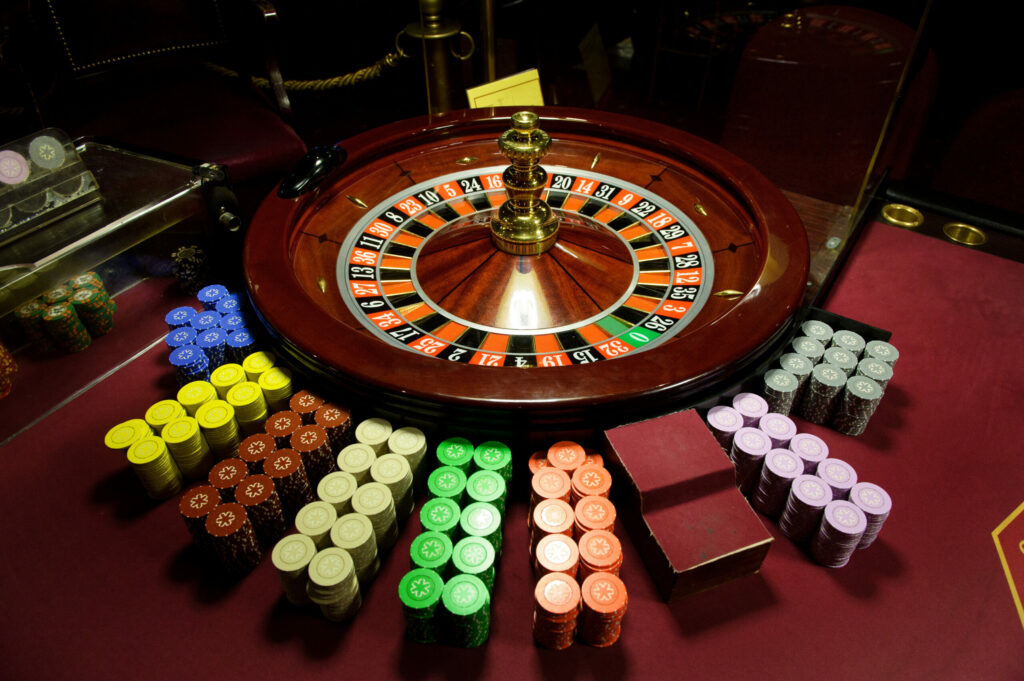
How Does Roulette Maths Create A House Edge?
At first glance, roulette looks simple: pick a number, colour, or section and see where the ball lands. Beneath that surface is a bit of arithmetic that gives the casino a built-in margin, often called the house edge.
This edge does not change the outcome of any individual spin, which is random. Instead, it reflects the long-term average built into the pay table. Over many spins, the expected results lean towards the house by a small but consistent amount.
The key is the zero. A European wheel has 37 pockets, numbers 1 to 36 plus a single zero. That zero is neither red nor black, odd nor even, so it tilts the numbers slightly in the casino’s favour.
It reduces the chance of winning on the even-money bets to 18 out of 37, which is about 48.65 percent, while the payout still treats it like a near 50 percent proposition. Over time, that tiny gap is where the casino earns its margin.
On American-style wheels there is an extra double zero, taking the total to 38 pockets. That increases the house edge further because the payouts remain the same while the true odds get a touch longer.
A quick example helps. On an even-money bet, the house edge on a single-zero wheel is roughly 2.7 percent. On a double-zero wheel it is roughly 5.26 percent. The difference comes purely from the extra zero pocket.
So, for every £10 staked repeatedly over many spins, the average loss trends towards about 27p on a single-zero game. Actual session results will vary, and you could be up or down in the short term, but the expectation stays the same.
On a straight-up number, you are paid 35 to 1 even though there are 37 possible outcomes. If the true odds were paid, it would be 36 to 1. That difference creates the same margin in a different way, again reflected only over the long run.
No staking pattern can alter these underlying probabilities. Systems that change bet sizes or sequences do not shift the expected return, because the payouts are set a notch below the true odds, and that is where the advantage sits.
Table limits, volatility, and the size of your bets can affect how bumpy the ride feels, but they do not remove the edge. Set sensible limits, play for entertainment, and never stake more than you can afford to lose.
Now that the maths is clear, there is one more choice that influences how far your bankroll might stretch. The wheel type and the bet types you prefer can change volatility, and choosing a single-zero game over a double-zero version reduces the built-in edge against you.
Is European Roulette Better Than American For Players?
European roulette has a single zero, giving 37 pockets in total. American roulette adds a double zero for 38 pockets. It may appear a small tweak, but that extra pocket changes the probabilities and the house edge.
On even‑money bets (such as red/black or odd/even), European wheels win 18 out of 37 spins, about 48.65 percent. On American wheels, they win 18 out of 38 spins, about 47.37 percent. That difference increases the house edge from roughly 2.70 percent on European roulette to around 5.26 percent on American roulette.
Put another way, the long‑run return to player (RTP) is approximately 97.30 percent for European and 94.74 percent for American. If you are staking £10 repeatedly, the long‑term average loss is about 27p per spin on a single‑zero wheel, rising to just over 52p on a double‑zero wheel.
These figures are mathematical expectations over a large number of spins. Actual results vary from session to session, and past outcomes do not predict future results. No betting system can remove the built‑in house edge.
If you prefer lower average cost and a slower drain on your balance, a single‑zero game generally offers better odds. Check the table rules before you sit down—variants such as la partage or en prison on even‑money bets can further reduce the house edge on European wheels.
Always play responsibly: set limits you can afford, take breaks, and avoid chasing losses. Roulette is a game of chance and should be treated as entertainment rather than a way to make money.
Do Betting Systems Let You Beat The House?
Betting systems are appealing because they offer structure and a clear set of steps to follow. The Martingale doubles after a loss, the Paroli increases after a win, and the Fibonacci follows a sequence to adjust stakes. Each one alters how your stake rises and falls, which can make short sessions feel more deliberate and controlled.
That sense of order can help with pacing and record‑keeping, but it does not create an advantage over the game. These systems manage staking decisions; they do not change the underlying odds or convert a negative expected return into a positive one.
What they do not change is the probability of each spin or the payouts attached to results. The house edge described earlier applies regardless of how you size your next wager, and it is reflected in the game’s rules and returns to player. On digital games, outcomes are produced by a random number generator; on physical wheels, each spin is an independent event.
A string of reds does not make black more likely next time, and a single win does not make the next loss less likely. This is the gambler’s fallacy: reading patterns into randomness and assuming balance must arrive on schedule. It sits quietly behind many systems and can encourage decisions that feel logical but are not supported by probability.
These approaches can also raise risk. Progressions that chase losses can push stakes up quickly, so a modest bankroll can be put under pressure by a surprisingly short run of losing spins. Even positive progressions can swing results sharply, which may feel exciting in the moment but does not shift the long‑term arithmetic.
Practical limits add further constraints. Table maximums cap how far a progression can go, and bankroll limits mean you may not reach the “recovery” bet even if a win eventually occurs. Variance can remain high for longer than expected, and the cost of reaching that next step can escalate rapidly.
If staking plans cannot change the maths, what stops someone riding a progression until a win finally lands?
In reality, exponential stake growth, table limits, and finite funds usually intervene first. A single extended losing streak can absorb a session’s budget, and any eventual win may not cover the cumulative outlay. Over time, the house edge and volatility mean progression play cannot guarantee profit.
Gamble responsibly: set time and spend limits, avoid chasing losses, and only stake what you can afford to lose. Take breaks, keep play recreational, and seek support if gambling stops being fun or affects your wellbeing.
How Table Limits And Payouts Prevent Long-Term Wins
Roulette tables have minimum and maximum bets to cap exposure. These limits exist for game management and fairness, and they also stop loss‑chasing staking plans from running indefinitely.
They help ensure risks do not escalate unchecked, protect other players’ experience, and keep the game within clearly posted parameters. Limits vary by table and venue, but the principle is consistent.
Take a simple example. Start at £1 and double after each loss. The sequence would go £1, £2, £4, £8, £16, £32, £64, then £128. After seven consecutive losses you would need £128 on the next spin, and the total placed across that run would already be £255 before the eighth bet. Figures are illustrative only, but they show how quickly stakes can climb.
Many tables will not allow the next step up because the table maximum has been reached, or the player’s bankroll has. If the larger “recovery” bet cannot be placed, the earlier losses remain unrecovered, and the session can end with a significant deficit. Rapidly increasing stakes also heighten the risk of material losses in a short period, which is why chasing losses is not advised.
Payouts work in tandem with limits. A straight‑up win pays 35 to 1, even though there are 37 outcomes on a European wheel (single zero). Even‑money bets pay 1 to 1 while winning less than half the time because of the zero. Those small pricing differences, repeated over time, create the house edge (around 2.7% on European wheels) and keep the margin steady.
Each spin is independent and random. No staking system changes the underlying probabilities or removes the house advantage, and no strategy can guarantee profit. Short‑term results can vary due to chance, but over the long run the combination of fixed payouts and table limits keeps the expected outcome in the casino’s favour.
Gambling should be a form of entertainment, not a way to make money. Set a budget, use tools like deposit and time limits, and never stake more than you can afford to lose. If you feel pressure to chase losses, take a break and consider seeking support.
Can Players Gain An Edge With Biased Wheels Or Dealer Patterns?
In the past, a poorly maintained wheel could drift slightly, nudging the distribution of results. A few well-documented cases from decades ago tell that story. Today, casinos document maintenance schedules, rotate or swap wheels between tables, and use precision-level checks and balancing to verify that pockets and frets are within tolerance. Outcomes are also statistically monitored; if results deviate beyond normal variance, equipment is inspected or taken out of service. All of this makes a meaningful, persistent bias extremely unlikely.
Online, outcomes are produced by Random Number Generators that are independently tested and certified by recognised laboratories. There is no physical wheel to exploit, and each spin is designed to be independent of the last with no memory. Return to Player information and game rules are published, and regular audits help ensure fairness within stated parameters.
What about reading a dealer’s hand or spin speed? It is a popular theory, but dealers are trained for consistency, and any small variations are overwhelmed by the random motion of the ball. Procedures such as alternating spin direction, varying ball release points, and rotating dealers further reduce any potential for patterning. If a number or colour seems to appear more often in a short burst, that is normal variability rather than a repeatable edge, and should not be relied upon.
With physical and procedural checks in place, looking for a mechanical or human pattern is not a realistic route to long-term profit. The house edge still applies, and attempts to exploit perceived faults may breach house rules. In the rare event of an equipment issue, operators may void results in line with their terms.
Gambling should be viewed as entertainment, not a way to make money. Never chase losses, set limits, and only stake what you can afford to lose.
Why Short-Term Wins Don’t Prove A System Works
A few quick wins can feel persuasive, even decisive. It is easy to credit a staking plan or a hunch when results run your way for a spell, but short bursts of success are most often just luck rather than evidence of a reliable method.
No staking system or tip can change the underlying probabilities of a game or market. Outcomes remain uncertain, and any sequence of wins or losses should be viewed as part of normal play, not proof that a system has an edge.
Short-term swings are a natural feature of random outcomes. Over small samples, clusters and streaks appear more often than intuition expects, creating the illusion of a pattern or control. This can tempt players into the gambler’s fallacy, assuming a run must continue or reverse on cue.
Over larger samples, results drift back towards the expected averages, a principle often called the law of large numbers. In regulated gambling, those averages reflect the published return-to-player (RTP) figures or the house advantage, which will tend to reassert themselves as play continues.
This is why a strategy can look brilliant over twenty spins and very ordinary over two thousand. A temporary run does not validate the method; it reflects normal variance that evens out with time, and past performance is not a reliable indicator of future results.
With that in mind, it helps to set realistic expectations before playing at all. Treat gambling as entertainment, not a way to make money, and remember there are no guaranteed systems or risk-free staking plans.
Keep control by setting limits on time and spend, never chase losses, and take breaks if the fun stops. Only gamble what you can afford to lose, and seek support if you feel your play is becoming harmful.
What Should Players Expect From Roulette?
Roulette is a game of chance. Each spin is independent, and past outcomes do not shape the next result. Sometimes you will experience favourable runs, sometimes not, and no strategy can guarantee a return. Online games use certified random number generators, and live tables rely on the physical wheel, but in both cases the outcome is random and unpredictable.
Systems such as doubling stakes or betting patterns do not alter the odds or the house edge. They can change the pace of your bankroll rising or falling, but they cannot make the game profitable in the long run.
Approach play as paid entertainment. Set a budget you can comfortably afford to lose, decide on a time limit in advance, and consider lower-volatility bets if you prefer more frequent smaller wins. Where possible, choose single‑zero (European) wheels, as they typically carry a lower house edge than double‑zero (American) versions.
Be mindful of house rules. European roulette usually has a house edge of around 2.70%, while American roulette is about 5.26%. Some tables offer rule variations such as La Partage or En Prison, which can reduce the effective edge on even‑money bets. Check table limits and rules before you start so your choices match your budget and risk tolerance.
Take regular breaks so decisions stay clear, and only play if you are over 18 and it remains enjoyable. Do not chase losses or play with money set aside for essentials. If it stops being fun, or you feel pressure to recover losses, it is time to step away.
Use safer gambling tools if you need extra control, such as deposit limits, reality checks, time‑outs, or self‑exclusion. Support services are available if you are worried about your play or someone else’s.
Understanding the edge, choosing the version that suits you, and treating outcomes as random is the best way to keep play enjoyable. There is no system that beats the maths, and going in with that knowledge helps keep expectations grounded and the experience on your terms.
**The information provided in this blog is intended for educational purposes and should not be construed as betting advice or a guarantee of success. Always gamble responsibly.