
Can AI Predict Roulette? Machine Learning, Algorithms & Bots
Artificial intelligence gets talked about as if it can solve anything, which is why the idea of predicting roulette is so intriguing. The reality is more technical and less glamorous, involving randomness, physics, and strict rules that are designed to keep outcomes unpredictable.
In this blog post, we look at whether AI and machine learning can meaningfully forecast roulette results, how physical wheels differ from online RNGs, the types of algorithms people try, and what kind of data would even be useful. We also cover physics-based methods, bot detection, UK rules, common failure points, and where ethics come into play.
If you choose to play, keep it within your limits and treat any tech as exploratory rather than a route to influence results.
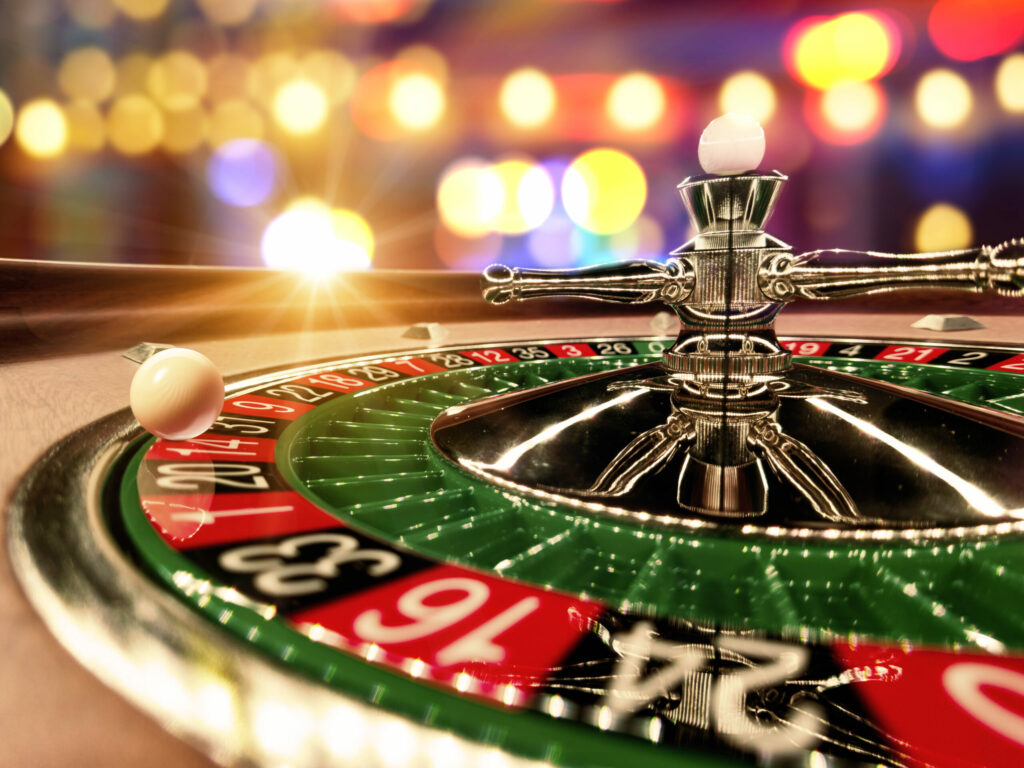
Can AI Predict Roulette Spins?
AI can analyse huge amounts of data, but applying it to roulette hits a core obstacle: the game is intentionally designed to produce unpredictable outcomes. On a well-maintained wheel, each spin is intended to be independent. Online versions use random number generators that are audited for fairness, with controls that make prediction infeasible.
People have tried training models on past spins to find recurring patterns. The snag is that previous outcomes are not meant to affect the next one, so pattern-finding quickly turns into seeing structure where there is none. Even sophisticated models that thrive in other fields tend to plateau here.
The short version is that reliable, repeatable prediction is not what roulette is built for. That said, the way a physical wheel behaves brings a different set of considerations, which is where many prediction attempts focus.
How Physical Roulette Wheels Affect Predictability
On a physical wheel, predictability hinges on precision engineering and maintenance. Reputable venues rotate wheels, check for balance, replace worn parts, and log routine servicing so that the ball’s motion is as free from systematic influence as possible.
The one practical crack researchers look for is wheel bias: small imperfections that make certain pockets appear slightly more often across a very large sample. Detecting this requires thousands of spins collected under consistent conditions, careful statistical testing, and a stable wheel. In modern settings, any hint of bias is usually short-lived because maintenance resets the system.
There are other physical wrinkles. Ball and wheel speeds vary from spin to spin, dealers change rhythm, and deflectors near the rim scatter the ball before it drops into a pocket. All of this makes stable prediction extremely difficult. Casinos also watch for unusual betting on specific sectors, since that can be a sign someone is chasing a perceived bias.
If physical wheels make you wonder about digital ones, it is worth seeing how online results are generated and why that difference matters for AI.
How Do Online RNGs Differ From Live Wheels?
Online roulette uses random number generators to map a computer-produced number to a wheel outcome. These systems rely on well-studied algorithms, frequent audits, and security controls that prevent external access to the internal state. Without that internal state, outputs are designed to be practically unpredictable.
Live casino roulette uses a real wheel and a real ball. Outcomes come from mechanics rather than software, which is why people sometimes try to model motion or look for subtle, persistent patterns. As mentioned earlier, the upkeep of professional wheels is intended to close off those avenues.
From an AI perspective, the gap is clear. RNG-based games offer no physical signals to measure, while live games present noisy physical data that is hard to capture accurately in real time.
What Machine Learning Models Are Applied To Roulette?
Researchers and hobbyists have tried a range of models. At the simple end, logistic or linear regression can estimate probabilities for colours, dozens, or sectors. More complex models, like random forests and neural networks, attempt to extract weak signals from large datasets. Time-series methods cluster sequences of spins, while deep learning tries to learn representations of wheel behaviour from video.
The issue is not that these tools are incapable in general. It is that roulette does not provide a stable signal in the way, say, weather or language does. Independent spins and regular maintenance limit any persistent structure a model could exploit. When a model does appear to work, it is often overfitting to noise, benefitting from selection bias, or capitalising on a quirk that disappears the moment conditions change.
Some have explored reinforcement learning, not to predict the next number, but to adjust stake sizing based on perceived short-term fluctuations. That approach still faces the same headwind: without a genuine predictive edge, clever staking cannot create one.
With that in mind, how well do these ideas hold up when tested in real venues?
How Accurate Are AI Predictions In Real Casinos?
In practice, accuracy is slim. Well-run casinos manage equipment to keep outcomes within expected statistical bounds, and what looks like a hot streak almost always melts away over larger samples. Studies that claim an edge tend to rely on niche setups, unusually permissive data collection, or wheels later shown to be out of spec.
Even when a minor pattern is found, it is fragile. Routine servicing, swapping a ball, or altering spin habits can erase it instantly. Staff are trained to spot atypical betting behaviour, and using external devices to measure spins or communicate predictions is not permitted in the UK.
For those approaching this as a technical project, the next question becomes what data would be required to test ideas properly and where that runs into practical limits.
What Data Is Needed To Train A Roulette Model
Training any model begins with data that truly reflects how the game runs. The key is not just quantity, but quality, context, and whether the collection method is allowed.
Data Sources
Researchers use a mix of historical logs, public datasets, recorded streams, or in-person observations. Useful context includes wheel manufacturer and model, wheel ID, dealer shifts, ball type, and the time of each spin. In live settings, clear permission is essential. Covert filming, hidden sensors, or intrusive recording will breach house rules and may break the law.
Online datasets are different. Because RNGs do not expose physical signals, all you have are sequences of results and timestamps from audited games. Without access to the generator’s internal state, past outputs cannot meaningfully inform the next one.
Feature Engineering
For physical wheels, features might include estimated wheel and ball speeds, revolution counts, drop point estimates, and the sector where the ball first contacts the frets. Capturing these accurately demands synchronised, high-frame-rate video or specialised equipment, plus calibration to map pixels to real angles.
For online games, features are limited to past outcomes and metadata like table ID and timing. Because spins are independent, engineered features risk encoding noise rather than signal, which is why apparent gains often vanish in out-of-sample testing.
With the groundwork set, it is natural to ask whether physics-based approaches can do better than general-purpose machine learning.
How Do Physics-Based Algorithms Work?
Physics-based methods attempt to model the motion of the ball and the wheel. The basic idea is straightforward: estimate the angular velocity and deceleration of both, work out when the ball will drop from the rim, then project a likely impact sector relative to the spinning wheel.
In controlled experiments, this can narrow outcomes to a region rather than a single pocket. The problem is real-world messiness. Small measurement errors balloon over time, deflectors and frets scatter the ball on contact, and dealers vary speed and release points. Casinos can also change ball sizes or swap wheels, which alters dynamics and invalidates previous measurements.
To collect the inputs needed at the table, people have tried metronome-like timing, concealed electronics, or high-speed cameras. Such devices are not allowed in UK casinos, and attempts to use them risk immediate intervention. That leads to the next practical barrier: detection.
How Do Casinos Detect And Block Bots?
Operators invest heavily in spotting automated or assisted play. Online, systems look for patterns that do not match human behaviour, such as consistent sub-second decision timing, 24/7 activity without natural breaks, or perfectly regular stake adjustments. Device fingerprinting, IP reputation, browser integrity checks, and behavioural analytics help distinguish genuine users from scripts.
Back-end tools run statistical tests on gameplay to catch improbable consistency, and friction points like verification prompts or re-authentication can interrupt automation. Accounts flagged for investigation may face suspension while logs are reviewed against the terms and conditions.
In physical venues, surveillance teams watch for signalling, covert devices, and coordinated betting. Staff training and routine audits support the same goal: keep games fair for everyone.
With detection covered, the obvious question is where the law stands on bots themselves.
Are Roulette Bots Legal In The UK?
Roulette bots are not permitted by licensed operators in the UK, and using them breaches site rules and UK regulations around fair play. Terms typically prohibit any external assistance, including scripts, automated decision tools, or software that reads game state and places bets.
If an account is found to be using automation, it can be closed, balances may be withheld if rules have been broken, and access to the operator can be permanently removed. In serious cases, matters can be escalated for further action.
If you are unsure what is allowed, check our rules before you play or ask our support team. It keeps your account safe and the games fair.
Common Limitations And Failure Modes
Several pitfalls recur when AI is aimed at roulette. Independence of spins limits learnable structure, as covered earlier. Data collected from brief sessions is often too small to be meaningful, and models that look impressive on a tiny sample usually crumble at scale.
Overfitting is a constant risk. With enough parameters, a model can appear to discover a pattern that is really just noise. Multiple-comparison traps make this worse: testing many ideas and only reporting the best result gives a false sense of reliability. Non-stationarity adds another layer, because wheels are serviced, dealers change, and software is updated, which shifts the environment under the model’s feet.
Practical constraints bite too. High-quality video with accurate timing is hard to obtain legitimately, RNG outputs offer no physical signals to exploit, and operators restrict data scraping. Even when a small edge is claimed, operationalising it within house rules is another hurdle entirely.
Ethical And Regulatory Considerations For Using AI In Casinos
In the UK, the UK Gambling Commission sets clear expectations around fairness and player protection. Using bots, hidden devices, or any automated systems to gain an advantage goes against those rules and against operators’ terms. Consequences include account closure, forfeiture of funds where rules are broken, and further investigation where appropriate.
There is also the ethical side. Trying to manipulate outcomes or automate play undermines trust and shifts risk onto other players and the operator. A fair game relies on everyone following the same standards, and technology should not be used to sidestep that.
If you choose to play, set limits that fit your circumstances, take breaks, and only stake what you can afford to lose. If gambling starts to affect your well-being or finances, seek help early. GamCare and GambleAware provide free, confidential support.
AI can be fascinating to explore as a technical subject, but it is not a shortcut to predictable outcomes, and the safest approach is to keep play occasional, informed, and within your control.
**The information provided in this blog is intended for educational purposes and should not be construed as betting advice or a guarantee of success. Always gamble responsibly.